Is the RTX 5080 Worth Buying? Price, Performance and Availability Analysed
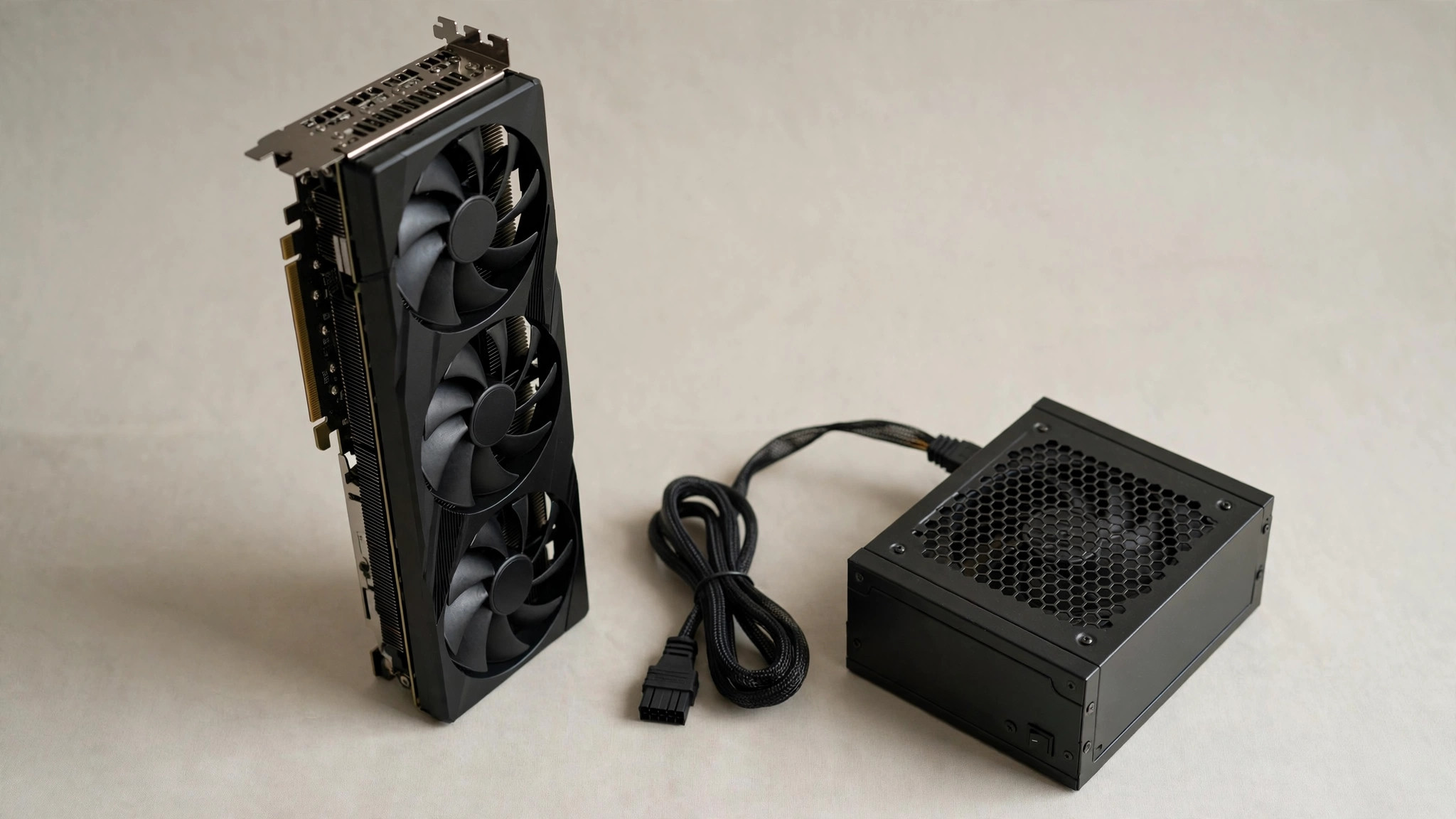
Introduction
The RTX 5080 is NVIDIA's second-tier desktop graphics card in the Blackwell GeForce RTX 50 series. It was announced at CES 2025 on 7 January 2025, launched on 30 January 2025, and carries a United States official suggested price (MSRP) of US$999. It sits below the flagship RTX 5090 and above the RTX 5070 Ti, with the previous-generation RTX 4080 Super and RTX 4090 as the natural points of comparison. For anyone considering a purchase in 2026, the question is not simply "is the 5080 fast?" It is: how much faster than the 5070 Ti, and at what premium? How much slower than the 5090, and is half the MSRP genuinely good value? How big is the upgrade over the previous generation? Will 16GB of VRAM last? And what power supply, case and cooling does it need?
Everything below rests on NVIDIA's official specifications and independent reviews. The price section covers only historical trends at stated points in time, not a current price. Any statement about what a card "sells for now" must be verified live with a retailer, with stock status confirmed, before it can be relied on. Warranty periods, warranty terms and return arrangements vary by brand and shop — check with the seller, as published by the shop.
Official Specifications: 5080 vs 5090 vs 5070 Ti vs 4080 Super
Model precision comes first. The desktop RTX 5080 uses the Blackwell GB203 chip, with 10,752 CUDA cores, 16GB of GDDR7 memory, a 256-bit memory interface and a 360W Total Graphics Power (TGP). The table below uses NVIDIA's official specifications.
| Item | RTX 5090 | RTX 5080 (desktop) | RTX 5070 Ti | RTX 4080 Super |
|---|---|---|---|---|
| Architecture / chip | Blackwell GB202 | Blackwell GB203 | Blackwell GB203 | Ada Lovelace AD103 |
| CUDA cores | 21,760 | 10,752 | 8,960 | 10,240 |
| Memory | 32GB GDDR7 | 16GB GDDR7 | 16GB GDDR7 | 16GB GDDR6X |
| Memory interface / bandwidth | 512-bit / 1,792 GB/s | 256-bit / 960 GB/s | 256-bit / 896 GB/s | 256-bit / 736 GB/s |
| Base / Boost clock | Per official listing | 2.30 GHz / 2.62 GHz | Per official listing | Per official listing |
| TGP | 575W | 360W | 300W | 320W |
| Recommended system PSU | 1,000W | 850W | 750W | 750W (third-party summary) |
| US MSRP | US$1,999 | US$999 | US$749 | US$999 (at launch) |
| Launch | 30 January 2025 | 30 January 2025 | February 2025 | 31 January 2024 |
Several figures deserve attention. The 5080 has about half the CUDA cores of the 5090 (10,752 versus 21,760) and about 54% of the 5090's memory bandwidth (960 versus 1,792 GB/s). The 5080 and the 5070 Ti share exactly the same memory capacity and bus width; the gap is in core count, clock speeds and power. Against the 4080 Super, the 5080 adds 512 CUDA cores, moves memory from GDDR6X to GDDR7, lifts bandwidth from 736 GB/s to 960 GB/s, and raises TGP from 320W to 360W.
The rest of the 5080's official specification is as follows: 5th-generation Tensor Cores with 1,801 AI TOPS; 4th-generation RT Cores with 171 TFLOPS of ray-tracing compute; 30 Gbps memory speed; PCIe Gen 5 x16; DLSS 4 (Super Resolution, DLAA, Ray Reconstruction, Frame Generation, Multi Frame Generation); NVIDIA Reflex 2; two 9th-generation NVENC encoders and two 6th-generation NVDEC decoders, with AV1 encode and decode supported; CUDA Capability 12.0; no NVLink support; display outputs of three DisplayPort 2.1b plus one HDMI 2.1b, supporting up to 4K 480Hz or 8K 165Hz (DSC) and up to four displays; Founders Edition dimensions of 304 mm long by 137 mm wide, a true 2-slot card meeting the SFF-Ready standard; maximum GPU temperature 88°C; recommended system power supply of 850W (NVIDIA's footnote cites a Ryzen 9 9950X configuration as the baseline, recommends a PCIe CEM 5.1-compliant supply, and notes that actual requirements depend on system configuration); and a single 16-pin power connector, supplied with an adapter of three PCIe 8-pin to one 16-pin, or a single PCIe Gen 5 cable of 450W or more.
Several lookalike models must not be confused. The RTX 5090D is the China-market version of the 5090, a compliance version under export controls. It keeps the same 21,760 CUDA cores, 32GB of memory and 512-bit interface, but AI TOPS is firmware-limited to 2,375 (the 5090 is 3,352). The RTX 5090D V2 is the successor to the 5090D for China. It also keeps 21,760 CUDA cores and 2,375 AI TOPS, but memory is cut to 24GB GDDR7, 384-bit and 1,344 GB/s. It went on sale in China on 12 August 2025 at an official price of 16,499 yuan. The 5090D V2 is not a variant of the 5080 and must not be described as one. The RTX 5080 Laptop GPU is the notebook version, with 7,680 CUDA cores — an entirely different product from the desktop card. Desktop discussion must not apply laptop specifications.
Performance: Native Performance versus DLSS 4 (With Test Conditions)
Before discussing 5080 performance, native performance and DLSS 4-assisted displayed frame rates must be kept apart. They cannot be compared directly.
NVIDIA's Official Claim: The Condition Matters
At CES 2025, NVIDIA claimed that with DLSS 4, the 50 series would be up to 2 times faster — the 5090 up to 2 times faster than the 4090, and the 5080 up to 2 times faster than the 4080. This is NVIDIA's official claim, and the "2 times" figure covers the full DLSS package including DLSS 4 Multi Frame Generation. It is not native rasterisation performance being 2 times faster. Omitting that condition would be misleading.
NVIDIA's official DLSS 4 description also states that Multi Frame Generation can generate up to three additional frames for each traditionally rendered frame (4X mode), and that the full DLSS package can lift frame rates up to 8 times over traditional brute-force rendering. Note: the "up to 8 times" figure is NVIDIA's official statement for the 5090 scenario and must not be applied directly to the 5080. DLSS Super Resolution, Ray Reconstruction and DLAA use a Transformer model, improving temporal stability, reducing ghosting and improving moving detail.
Independent Reviews: Native (Multi Frame Generation Off) Gaming Performance
Reviews differ because test game selections, CPUs and driver versions differ. Only reviews with stated test conditions are cited below, and results are presented as ranges, not a single invented "standard score".
TechPowerUp and PC Games Hardware (via the Galaxus review round-up), 4K resolution: TechPowerUp testing showed traditional rasterisation on average about 14% faster than the 4080 Super, ray tracing on average about 11% faster, the 4090 still leading the 5080 by about 13% in native rasterisation, and the 5090 leading the 5080 by about 52%. PC Games Hardware (German review) showed traditional rasterisation about 7% faster than the 4080 Super and ray-traced games about 14% faster, concluding that the native generational gain from the 4080 to the 5080 was among the smallest in decades. Combined judgement: the 5080's native gain over the 4080 Super sits in the range of about 7–14% (rasterisation) / 11–14% (ray tracing), depending on game selection; it does not reach the 4090's native performance.
Trusted Reviews (5-game suite, Ryzen 9 9900X platform): Average frame rates were 120.93 fps at 1080p (minimum 69.52), 98.63 fps at 1440p (minimum 60.01), and 61.56 fps at 4K (minimum 43.49). The suite included demanding settings such as Cyberpunk 2077 (about 34.7 fps at 4K), Black Myth: Wukong (about 40 fps at 4K, ray tracing off) and Metro Exodus Extreme (about 58 fps at 4K), which pulled the averages down. Against the 4080 Super: about 12.9% faster at 4K (about +6.5 fps), about 4.4% faster at 1440p, and a gap at 1080p too small to be worth reporting. These figures must always be cited with the condition "five games, including extremely demanding settings" — not as "4K average 61 fps" as if every game behaved that way.
Review round-up (citing TechPowerUp, Hardware Unboxed, Eurogamer and Digital Foundry): With DLSS 4 Multi Frame Generation off, the 5080 was about 10–15% faster than the 4080 Super / 4080; about 66% faster than the 3080, about 49% faster than the 3080 Ti, about 46% faster than the 3090 and about 26% faster than the 3090 Ti. On cost per frame, analysis from Hardware Unboxed and Eurogamer / Digital Foundry found the 5080's cost per frame better than the 5090 and the previous-generation 4080 Super / 4080. Other reviews noted that the 5080 hits a CPU bottleneck at low resolutions (1080p / 1440p), even with a Ryzen 7 9800X3D, and that 4K is more often GPU-bound and therefore the best reflection of the card itself.
Gamers Nexus (Founders Edition review, as reported): According to Gamers Nexus testing, in Black Myth: Wukong with ray tracing at 4K, the 5090 averaged 88 fps, the 4090 averaged 65 fps, the 5080 averaged 59 fps and the 4080 FE averaged 51 fps; the 5080 was about 15% faster than the 4080 FE but still behind the 4090. Gamers Nexus measured the 5080 FE clock at about 2,670 MHz, above NVIDIA's official Boost specification of 2.62 GHz.
On ray tracing, the 5080's 4th-generation RT Cores support Mega Geometry, which NVIDIA says can handle more ray-traced triangles; independent reviews generally found the 5080's ray-tracing generational gain less consistent than its rasterisation gain, with smaller gains in individual titles. Path tracing is the 5080's hardest scenario: even the 5080 can only hold playable frame rates in some games under native path tracing, and real play typically needs DLSS Super Resolution plus Multi Frame Generation together.
DLSS 4 Multi Frame Generation: How It Works and Its Limits
DLSS 4 Multi Frame Generation (MFG) is one of the 5080's largest additions over the 40 series, and also one of the most easily misunderstood.
How it works: DLSS 3 Frame Generation generated one frame per rendered frame; DLSS 4 MFG can generate up to three additional frames per rendered frame (4X mode). DLSS 4 uses an AI model (rather than the older hardware optical-flow accelerator) for optical-flow estimation, and uses in-GPU Flip Metering for frame pacing to reduce stutter. MFG interpolates frames between two already-rendered frames; it does not predict the future. It can therefore make motion look smoother, but it cannot raise the game's simulation or input sampling rate.
Limits — these sit alongside the benefits; "frame rate times 4" alone is not the full picture.
First, latency does not fall with frame rate. MFG raises the displayed frame rate, not input responsiveness. A game running at 60 fps has a frame interval of about 16.6 ms; with 4X MFG the display can reach 240 fps, but the underlying rendering interval remains about 16.6 ms, and the feel of the controls remains close to the original base frame rate. Independent testing also showed latency rising slightly with MFG enabled.
Second, the base frame rate is the precondition. Reviews and NVIDIA's usage guidance agree: MFG works best when the base frame rate already reaches about 60 fps. If the base frame rate is too low (for example 20–30 fps), MFG only makes the "looks smooth but feels sluggish" problem more obvious; it cannot turn an unplayable game into a playable one.
Third, image artefacts. Fast-moving objects and detail-heavy scenes can show ghosting, flicker and trailing; reports describe flickering text or light-and-shadow flicker in individual games under MFG. DLSS 4's Transformer model reduces ghosting compared with DLSS 3, but does not eliminate artefacts.
Fourth, competitive games should not use it. Competitive / esports titles should have MFG switched off, using DLSS Super Resolution plus Reflex for the lowest latency instead.
Fifth, game support is a precondition. MFG is only available in games and applications that support DLSS 4; NVIDIA claimed 75 games and applications supported MFG at launch. Older games may only be enabled via driver / NVIDIA App overrides, with results that may not be consistent.
Sixth, Reflex is a companion, not an option. MFG should be used with NVIDIA Reflex to control latency; with Reflex off, the latency cost is greater.
Red lines: "with MFG on, the 5080 equals / beats the 5090" does not hold; MFG frame rates cannot be compared directly with native frame rates; and any MFG frame-rate figure needs the base frame rate, game, resolution and MFG multiplier alongside it.
Power, Cooling and the 12V-2x6 Power Connector
Official Power Figures
The 5080's TGP is 360W, the recommended system power supply is 850W, and the maximum GPU temperature is 88°C. For comparison: the 5090 is 575W TGP / 1,000W recommended; the 5070 Ti is 300W / 750W; the 4080 Super is 320W. The 5080 is 40W above the 4080 Super, 60W above the 5070 Ti, and 215W below the 5090.
NVIDIA's official Founders Edition installation guidance: 850W is the minimum requirement; power option one is the supplied adapter (three PCIe 8-pin); option two is a single PCIe Gen 5 cable of 450W or more; the case must allow 304 × 137 mm and three slots of space (the card itself is 2-slot, with additional clearance needed for cooling), and the power cable needs an extra 36 mm of space.
Independent Measured Power and Temperature (Gamers Nexus, FE)
Full-load GPU temperature was about 65–66°C (automatic fan setting); memory temperature was about 72–75°C, far below the memory TjMax limit of about 105°C. Fan speed was about 1,470–1,500 RPM; noise was similar to the 5090, slightly quieter. Measured clock was about 2,670 MHz, above the official Boost specification. Idle power was about 12.75W (desktop idle; depends on display, refresh rate and power plan), better than the 5090 at about 46W, the 4090 at about 29W, and close to the 4080 at 15–16W. Gaming power examples: Final Fantasy XIV at 4K about 298W; at 1440p about 290W. Power varies with game and settings.
Zotac 5080 Solid (an add-in-board version) comparison: under the same workload about 360W, 31.1 dBA, GPU temperature about 4°C lower than the FE, memory about 7–8°C lower; the FE was about 315W, 32 dBA, GPU 65°C, memory 72.8°C. Note: add-in-board versions differ in size, power limit and cooling design, so FE figures cannot be applied directly to every add-in-board version.
FE Cooling Design
The FE uses "Double Flow Through" dual-fan through-flow cooling: two fans side by side, with airflow passing straight through the heatsink; a large central unified vapour chamber contacts the GB203 GPU and the 8 GDDR7 memory chips, connected to five 8 mm copper heat pipes extending to two sets of cooling fins; the fins are slightly curved above to optimise airflow and pressure drop. The 5080 FE shares the same body design as the 5090 FE; the 5080 FE uses conventional thermal paste (not the 5090 FE's liquid metal). Even so, Gamers Nexus testing showed good 5080 FE temperatures, mainly because power is lower. The body is a true 2-slot (about 40 mm thick) and meets NVIDIA's SFF-Ready standard; most add-in-board versions are 2.5–3 slots or more, so buyers must go by the manufacturer's published actual dimensions.
The 12V-2x6 Power Connector: Relationship to 12VHPWR
The 5080 uses one 16-pin 12V-2x6 connector (the FE ships with a three 8-pin to one 16-pin adapter). 12V-2x6 is the revised version of 12VHPWR, under the ATX 3.1 / PCIe CEM 5.1 specification; the two are physically mutually compatible, and both are rated up to 600W (the cable itself has not changed — the change is in the socket on the GPU / power-supply side).
The key change is in the socket (not the cable): the power pins are lengthened by about 0.25 mm, and the sense pins are shortened (measured from the socket edge, the sense-pin recess grows from about 0.45 mm to about 1.7 mm, and the sense pin itself shortens from 4 mm to 2.75 mm). The principle: only when the plug is fully seated and the power pins are genuinely in contact do the sense pins connect, and only then does the GPU request high power. If the plug is not fully seated, the sense pins do not connect, and the GPU will not run at high power (in the open-open state, 12V-2x6 delivers 0W, whereas the older 12VHPWR could still deliver power). Identification: a 12V-2x6 socket is marked H++, the older 12VHPWR is marked H+; only an H++ plug with an H++ socket gives the full protection effect. Corsair's explanation also states that a 12VHPWR cable is a 12V-2x6 cable — the same cable; most cards produced after September 2023 already use the 12V-2x6 connector.
Risk and cautions sit alongside this; "already solved" is not accurate. 12V-2x6 is mechanical protection that reduces the risk of a not-fully-seated plug; it does not eliminate all risk. Even with 12V-2x6, there are still individual reports of melting incidents in the 50 series (mainly concentrated on the 5090), with causes linked to contact resistance and uneven current distribution; the 5080's power draw (360W) is below the 5090's (575W), so the risk is relatively lower, but it is not zero risk. Neither "the 5080 will definitely never burn" nor "the 5080 will definitely burn" holds (incidents exist; there is no official statistic on probability). Separately, reports of a melted-connector incident involving the 5080 / 5090D were traced afterwards to an RTX 4090 FE that had been tested earlier; the 5080 / 5090D themselves were undamaged — a misreported incident. The lesson: an old cable plus a not-fully-seated plug remains the main risk source.
Practical rules (general advice, not NVIDIA's verbatim official guidance): the plug must be pushed fully in until the latch is heard / confirmed engaged; avoid sharp bends at the plug root; prefer a native ATX 3.1 12V-2x6 power-supply cable to reduce adapter joints; after installation, check that no metal pins are exposed; if the power supply is an older ATX 3.0 unit, confirm the cable and adapter specifications — do not assume "it fits, so it is safe". If an adapter cable is used, each 8-pin group should use a separate power-supply cable per the brand's guidance, not daisy-chained sharing; and check the plug periodically for discolouration or odour.
The 16GB VRAM Debate: Both Sides Side by Side
16GB of VRAM is the 5080's most debated point. Both sides are set out below. Neither "16GB is definitely enough" nor "16GB is definitely not enough" holds.
The Case That 16GB Is Still Enough for Most Games
Review round-ups state that, including at 4K maximum quality, the VRAM use of the overwhelming majority of current games still sits within 16GB; there is no 32GB version of the 5080, and 16GB is the configuration NVIDIA set for its second-fastest gaming card. The accurate wording is "most", not "all". Reviews also state that the 16GB bottleneck appears first in heavy texture packs / mods, not in general 4K gaming.
For light AI work, 16GB is enough for models of about 7B–14B parameters (4-bit quantisation), general Stable Diffusion / SDXL work, and small LoRA fine-tuning. The "about" matters; the usable model in practice depends on framework, batch size and resolution.
The Case That 16GB Has Hit Its Ceiling, and AI / Heavy Creation Will Hit the Wall First
Notebookcheck (ASUS TUF 5080 OC review) found that in Indiana Jones and the Great Circle at 4K plus DLSS plus full path tracing, the game crashed repeatedly, and the review considered the VRAM limit to be the bottleneck; it also stated that this was an individual example, not a general trend, that other games did not show the same problem, and that the 4080 scored only about 17 fps in the same test. "The 5080 generally crashes" does not hold.
For AI / creation, the 5080's 16GB is a hard ceiling for large models. Once the working set exceeds 16GB, the card must offload data to system memory over PCIe, at a speed an order of magnitude slower than VRAM; the 4090's 24GB still has an advantage in such memory-bound work, and Blender OptiX rendering has been reported as about 15–25% faster on the 4090 (per Blender Open Data round-up). The 5080's AI TOPS (1,801) is higher than the 4090's (1,321), reflecting the Blackwell 5th-generation Tensor Cores and FP8 / sparse-compute advantage; but TOPS is a compute metric, not a capacity metric — when a model cannot fit in VRAM, higher compute cannot be brought to bear.
On the model-scale trend, open-source model sizes keep growing; a model that "just fits in 16GB" today may become tight in two years. Buyers considering a use period of more than two years should factor VRAM headroom into the decision. This is a trend judgement, not measured data.
VRAM Summary
Gaming: 16GB in 2026 remains a mainstream-adequate level for 4K gaming, but is no longer a "never worry" level; heavy texture packs / mods / full path tracing are the scenarios that hit the wall first. AI / creation: 16GB suits light-to-medium local AI and general creation; large models, large-batch generation and heavy 3D scenes should prioritise a model with more VRAM. Bandwidth versus capacity: the 5080's 960 GB/s bandwidth is higher than the 4080 Super's 736 GB/s, so data moves faster; but bandwidth cannot compensate for insufficient capacity — data that cannot fit is not helped by higher bandwidth.
Price and Availability Trends (Historical Points in Time, Not Current Prices)
Everything below is international media reporting at historical points in time, or NVIDIA's official MSRP (US dollars), with the point in time stated. None of these historical figures may be treated as a current price; before buying, verify the live in-stock price with a retailer. MSRP is only a United States suggested price, not a Hong Kong transaction price; Hong Kong retail prices are also affected by exchange rates, import / distribution costs, tax, and model version (Founders Edition versus each brand's custom version). Do not convert US$999 directly into Hong Kong dollars and treat it as a selling price.
The 5080's market price went through three phases: launch-period scalping → mid-2025 return to near MSRP → late 2025 to first half of 2026 above MSRP again amid memory shortages.
Launch period (January–February 2025): immediate sell-out and scalping. On launch day, 30 January 2025, United States online shops sold out almost entirely within about an hour; on Newegg, all 47 variants from a US$999.99 RTX 5080 base version to a US$2,799.99 RTX 5090 custom version showed as sold out. Before launch there were already reports of retail prices in some regions reaching about twice MSRP: according to UDN reporting, the 5080 in the China market could sell for about US$2,000 (about twice MSRP); a United States distributor received only 20 RTX 5080 cards and zero RTX 5090 cards in the first month; and tight supply was expected to last to the end of the first quarter or even the second quarter (this was media reporting citing UDN at the time; the figures describe the individual market conditions in that reporting, not a global uniform price). On 7 February 2025, PCWorld reported that board partners had begun raising prices, that the 5080 and 5090 were both hard to buy near MSRP, and that reseller scalping was common. The causes of launch-period tight supply, according to reporting at the time, included demand far exceeding expectations, communication / shipping arrangements between NVIDIA and board partners, and Lunar New Year effects on factory operations (the attribution of causes is media composite analysis; NVIDIA did not confirm each item).
Mid-period pullback (mid-2025 to September): some markets back to MSRP or below. Germany: in late March 2025 the cheapest RTX 5080 was about 1,169 euros, falling the following week to about 1,119 euros, roughly the local official suggested price; but the median was still about 1,389 euros, about 24% above MSRP (the lowest price and the median are two different concepts — do not take the lowest price alone as "the market price"). United States: in mid-2025 several custom 5080 versions returned to MSRP or below, for example the Gigabyte Windforce OC at about US$899, PNY at about US$929, and the ASUS PRIME OC and Founders Edition at about US$999 (individual retailer prices at that reporting point in time, not 2026 current prices). On 29 September 2025, TweakTown reported that United States GeForce RTX 50 series prices had generally fallen to MSRP, with the Gigabyte Windforce RTX 5080 16GB at Newegg at about US$999.99 (again, a snapshot at that point in time).
Heating up again (late 2025 to first half of 2026): memory shortages pushed prices up. TechSpot's Q2 2026 survey across 10 regions: compared with February 2026, the RTX 5080 fell on average by about 4%, but on average remained about 23% above MSRP; the United States low was about US$1,300, and other regions were generally at least about US$1,200 equivalent (this is an April 2026 survey snapshot, not a current price; currencies and taxes differ across regions — do not convert directly into Hong Kong dollars as a Hong Kong selling price). The same survey noted that the RTX 5090 averaged about 77% above MSRP; the 5080's premium was relatively lighter, but clearly out of the mid-2025 "back to MSRP" state.
On 17 October 2026, Hardware Busters reported (citing Tom's Hardware) that the 5090 was out of stock at multiple retailers, with third-party Amazon sellers asking around US$8,500 and Micro Center marking several 5090 models "Not Carried"; NVIDIA's Jeff Fisher told Taiwanese media on 16 October that the 5090 was not discontinued and that tight supply was an industry-wide constraint, reflecting a tightening high-end GPU market again; but for the 5080's specific Hong Kong availability and selling price on 18 October 2026, there is no reliable immediate source, and it must be verified live — the historical figures above must not be carried forward. Any "current price" claim needs a verification date and a retailer source; otherwise only the historical trend can be stated, never "it now sells for X".
Why Price-Comparison Figures Need Care: Mechanisms, Not Named Accusations
Everything below is a reminder at the "mechanism" level, not aimed at any specific price-comparison site, and no unverified individual site listing is cited:
- An out-of-stock price is not a transaction price. Price data may include out-of-stock models with old tags; a price for something that cannot be bought does not represent the market price. "In-stock price" and "out-of-stock / former tag" are different things.
- Expired prices. Price data may not be updated promptly; after a promotion ends, a retailer reprices, or exchange rates move, an old price can remain. Any cited price must carry a verification date.
- Different SKUs treated as one price. Under the single name "RTX 5080" there are the Founders Edition and many brands and cooling / overclocked versions, whose prices can differ greatly; if a comparison table does not list the full model and version, the comparison will be wrong. The full model needs to be named — never just "how much is a 5080".
- Statistics can distort the "average price". A GPU price survey explicitly stated that its statistics excluded out-of-stock models, because a large number of MSRP out-of-stock models would drag the average down and hide the price that can actually be bought; the cheapest SKU is often the first to sell out.
- Too-low a price is a warning sign. A tag far below the market may indicate a fake, a tampered card, a refurbished card sold as new, or another scam; buyers should check the model number, compare against the manufacturer's official specification page, and verify with tools such as GPU-Z.
Conclusion: price-comparison figures can only be a "preliminary screening" tool, not "transaction-price evidence". Go to the retailer's official site / shop to confirm model, in-stock status, final tax- / shipping-inclusive price, warranty terms and return policy — only then is the price genuinely comparable.
Authorised vs Parallel Import: General Principles Only
General principle: authorised goods are goods brought into the local market through a brand-authorised distributor, generally carrying local authorised warranty and after-sales support; parallel-import / grey goods are genuine goods sold by the manufacturer for another regional market and then brought into the local market through a non-authorised channel, which may not carry the local manufacturer's warranty, leaving the buyer reliant only on the seller's warranty. General principle: parallel-import goods may involve the following — the manufacturer's warranty not recognised by the local authorised distributor, warranty terms different from authorised goods, different manual language / accessory configuration, or goods having passed through many hands (general principle, not aimed at any brand or shop). General principle: parallel import does not equal fake — parallel import generally means genuine goods sold through a non-authorised channel; fake goods are counterfeit or tampered products. The two carry different kinds of risk, and buyers must judge them separately. Do not invent a specific brand's / shop's warranty years, warranty terms, or "how many years of warranty this shop's authorised goods carry". Warranty period, whether accidental damage is covered, repair location, and whether the original receipt is required must follow the terms published by the brand / shop at the time — check with the seller, as published by the shop / brand. Keeping the purchase receipt and complete packaging is generally a basic requirement for a warranty claim (general principle; specifics follow the brand / shop terms).
Readers considering Taobao / overseas self-purchase should note that any price seen there is a Taobao shop price and needs re-verification, and should allow for warranty geographic limits, shipping and duty costs, and return difficulty. A Taobao price must not be treated as a Hong Kong spot price.
Value Framework Against the Alternatives
This section uses only official MSRP (US dollars) and the relative performance from independent reviews. No Hong Kong specific selling price is stated, and no second-hand platform individual seller price is used. All percentages are results from individual reviews under specific game selections and resolutions; different reviews differ — they depend on the review and game selection.
vs RTX 5070 Ti: How Much Cheaper, How Much Slower
MSRP gap: the 5070 Ti is US$749, the 5080 is US$999 — the 5080's official price is US$250 higher, about +33%. Specification gap: both are 16GB GDDR7, 256-bit; the 5080 is 10,752 CUDA cores, 30 Gbps memory, 960 GB/s bandwidth, 360W; the 5070 Ti is 8,960 CUDA cores, 28 Gbps, 896 GB/s, 300W; recommended system power is 850W versus 750W. Performance gap: one review found the 5080 about 15% faster at 1440p and about 17% faster at 4K; another comparison test found the 5070 Ti about 18% slower than the 5080 (cited in the original wording, not re-converted). The two reviews' figures differ, which is normal test variation.
Value framework: whether to buy the 5070 Ti or the 5080 is not simply "which is better value". If the target is 1440p high frame rates, the gap between the two is relatively small and the 5070 Ti's value framework is better; if the target is 4K, the 5080's lead is more obvious, but it still costs about a third more in MSRP premium; most importantly, both have 16GB VRAM — upgrading to the 5080 does not give more VRAM; what is bought is more cores, higher clocks and more bandwidth.
vs RTX 5090: How Much More Expensive, How Much Faster
MSRP gap: the 5090 is US$1,999, about twice the 5080 (US$999), about US$1,000 more. Specification gap: the 5090 is 21,760 CUDA cores (about twice the 5080), 32GB GDDR7, 512-bit, 1,792 GB/s bandwidth, 575W; the 5080 is 10,752 cores, 16GB, 256-bit, 960 GB/s, 360W. Performance gap: one review found the 5080 on average about 34% slower than the 5090 (rasterisation); another review in 4K testing found the 5080 about 32% slower than the 5090, meaning the 5090 about 47% faster than the 5080. This is expressed as "reviews generally put the 5090 about 50% faster at 4K, depending on game selection" — not a single fixed figure.
Value framework: the 5090 is for "fastest at any cost" or for professional / AI workloads needing 32GB VRAM; for pure gaming, the 5080 offers about two-thirds of the 5090's performance at about half the MSRP, a better value framework, but the 16GB versus 32GB VRAM gap becomes a hard limit in large AI / creation loads; the 5090's 575W power also means higher power-supply and cooling costs.
vs RTX 4080 Super (Previous Generation, Same Tier)
Launch MSRP was the same: the 4080 Super's launch MSRP was also US$999. Performance gap: one review found the 5080 on average about 13% faster than the 4080 Super (rasterisation) and about 12% faster in ray tracing. Combined: "the 5080 is about 10–15% faster than the 4080 Super, depending on the game". Generational differences: the 5080 uses the Blackwell architecture, GDDR7, DLSS 4 (including Multi Frame Generation) and 9th-generation NVENC; the 4080 Super uses Ada Lovelace, GDDR6X and DLSS 3-generation features. Note: DLSS 4 Multi Frame Generation is 50-series only and it is not a 40-series feature. Supply status: the 4080 Super is a previous-generation product; new stock is only channel remainder, and buying a new 4080 Super is not the mainstream choice. If new 4080 Super units are still on the market, verify whether they are genuinely new, the warranty start point and the return terms. The accurate description is "previous-generation product, limited new stock in the market" — do not assert a specific end-of-production date.
vs RTX 4090 (Previous-Generation Flagship)
Launch MSRP: the 4090 was US$1,599, about 60% above the 5080's US$999. Performance gap: one review found the 5080 about 15% slower than the 4090 (rasterisation) and about 19% slower in ray tracing. Combined statement: "the 4090 still leads the 5080 by about 10–20% in traditional rasterisation and ray tracing, depending on game and resolution; in individual games the 5080 can draw or even pull ahead". VRAM gap: the 4090 is 24GB GDDR6X, 384-bit, 1,008 GB/s; the 5080 is 16GB GDDR7, 256-bit, 960 GB/s. The 4090's extra 8GB is a real advantage in large AI models, local LLMs and huge-texture creation scenes; for pure gaming, most games at 4K still do not exhaust 16GB. Power: the 4090 is 450W, the 5080 is 360W, a difference of 90W.
New-versus-used trade-off framework (no second-hand price stated): buying a new 5080 gives a new warranty, Blackwell features (DLSS 4, newer NVENC), lower power, and no prior owner's usage history; buying a used 4090 keeps traditional performance and VRAM advantages, but carries second-hand risks — whether the warranty is still valid / transferable, unknown usage history (for example whether it ran long-term under high load), and no new-warranty start point. Specific warranty transfer rules follow the brand's terms — check with the seller. Key reminder: second-hand prices must be verified live; do not use an individual seller's listing price as the market price. Second-hand transactions must test the card (GPU-Z, stress testing and similar).
Hong Kong Buyer Checklist
Everything below rests on NVIDIA's official specifications and general PC-building principles. Add-in-board dimensions, power and supply requirements differ by model and must follow that model's official specification page.
- Power: 850W or more? Is there a native 16-pin cable? What is the quality of the old power supply? The 5080's TGP is 360W, and the recommended system power supply is 850W or more. The power connector is one 16-pin 12V-2x6; an older supply without a native 16-pin cable needs an adapter cable (generally several 8-pin to 16-pin). A power supply with ATX 3.x specification and reliable quality is recommended; even if an old supply's wattage is sufficient, confirm its 12V output capability and cable condition. This article does not recommend specific power-supply models; buyers should go by the manufacturer's published specifications.
- Case: does this model's length / width / thickness fit? Founders Edition dimensions are 304 mm long, 137 mm wide, 2 slots. Brand custom versions can be much larger: for example the MSI 5080 Vanguard OC is 357 × 151 × 66 mm; another brand's three-slot version is 331.9 × 127.1 × 60 mm. Before buying, check that model's official dimensions — do not assume FE dimensions mean every 5080 will fit. Checklist: the case's maximum supported graphics-card length, slot thickness (2 slots versus 3 slots or more), whether the cooler / radiator will foul the card, and a graphics-card support bracket (a bracket is recommended against sag for long cards).
- Cooling: is case airflow enough? Ensure the case has enough intake / exhaust, and that the graphics-card fans are not blocked by other cables or drive cages; under sustained high load (gaming, AI, rendering), watch the internal case temperature; second-hand cards need temperature testing in particular. The 5080's 360W of heat needs matched cooling and case airflow — do not cram a high-end card into a small case.
- CPU: will resolution and game type make the CPU the bottleneck? General principle: the lower the resolution, the more obvious the CPU bottleneck; the higher the resolution, the more the load concentrates on the GPU and the lighter the CPU bottleneck. The 5080 is a 1440p / 4K card; at 1080p a CPU bottleneck is very likely, meaning the card is not fully utilised. If a 1080p display is paired with a 5080, the return on the graphics-card upgrade will be limited by the CPU; if 4K is the main use, CPU requirements are relatively relaxed. An absolute judgement such as "this CPU is definitely not enough / definitely enough" does not hold — the accurate framing is "depending on game and resolution". If the 5080 is used for high-frame-rate competitive gaming (1440p 240Hz and similar), CPU requirements will be higher; if the main use is 4K single-player blockbusters, the GPU is the dominant factor.
- Display: 1440p high refresh or 4K? The 5080 supports up to 4K 480Hz or 8K 165Hz (DSC), three DisplayPort and one HDMI. Pairing principles: a 1080p 60Hz display with a 5080 is a clear mismatch, and the card's performance will be wasted by the display; a 1440p high-refresh (144Hz or above) or 4K display is needed to realise the 5080; if the display has only older interfaces such as HDMI 1.4 / DP 1.2, confirm whether it can output the target resolution and refresh rate; do not assume every interface supports 4K high refresh.
- Purchase: full model number, in-stock status, final price, warranty terms, return policy — confirm all of these before paying. On fake-card risk, buyers should verify the model and performance. For verifying model and performance, buyers may refer to guidance on identifying counterfeit / tampered cards.
- Acceptance: unbox and check appearance, seat the power cable fully, run GPU-Z against the specifications, and run a stress test to verify temperature and stability.
The Super Rumour: How to Read Unconfirmed News
Everything in this section is rumour, with no official confirmation. NVIDIA has not acknowledged that an RTX 50 Super series exists. Everything below carries the qualifier "rumoured / reported / not officially confirmed" — none of the points below is fact.
The rumour is that NVIDIA plans an RTX 5080 Super (or 24GB version of the RTX 5080), lifting VRAM from 16GB to 24GB GDDR7 by switching to 3GB (24Gb) high-density GDDR7 chips (8 × 3GB), with the 256-bit interface unchanged; the GPU core is rumoured to remain GB203 with 10,752 CUDA cores, so the performance gain would come mainly from VRAM capacity, not core scale. Rumoured power is about 415–420W (rumoured), above the current 5080's 360W; the two figures come from different leaks and do not agree — the accurate phrasing is "rumoured to be higher than the current model". Rumoured launch timing: the latest round of rumours (BenchLife, October 2026) points to Q1 2027, possibly announced at CES 2027; the same series of rumours also includes the 5070 Super (18GB), 5070 Ti Super (24GB) and 5060 Super (12GB). There are reports that the 24GB 5080 may replace the current 16GB version rather than coexist (whether it replaces or coexists differs between reports — the accurate phrasing is "there are reports that").
The credibility and repeated shifts of the rumour deserve attention. The Super series rumour has been delayed many times: in May 2025 it was rumoured for before the end of 2025; then rumoured to be postponed indefinitely; in June–July 2026 rumoured to be postponed again because of the high price of 3GB GDDR7; and in October 2026 rumoured again for Q1 2027. The repeated delays are themselves a signal of low credibility (each rumoured point in time has reporting support; "delay" describes the rumour timeline, not an officially confirmed delay). The rumoured reasons for delay: 3GB GDDR7 chips are short and expensive, reportedly costing far more per chip than 2GB chips, making it hard to price the Super cards at a clear distance from current models; AI hardware demand for high-density memory has also intensified supply tightness. NVIDIA's official position: it has not acknowledged that a Super series exists, and has announced no name, specification, price or launch date (by the official product page — the official page lists only the 16GB 5080).
Separately, a report (January 2026) said NVIDIA had indefinitely postponed the entire RTX 50 Super series, partly because of rising VRAM prices. The two groups of rumours contradict each other (one says a Q1 2027 launch, the other says indefinite postponement), and neither has been confirmed by NVIDIA. The accurate phrasing is "there are rumours that … but NVIDIA has not confirmed it, and other reports say it has been postponed" — "the 24GB version will launch in a given month" and "the Super series has been cancelled" do not hold. An earlier rumour from 2025 said MSI had briefly listed a 24GB 5080 on a motherboard compatibility page, but that product never shipped.
Practical judgement for buyers (judgement below, not fact): "wait for Super or buy now" has no standard answer. It depends on: whether there is an urgent need now (an old card broken / completely inadequate → the cost of waiting for a rumoured card is continued time without a card); whether there is a genuine need for 24GB VRAM (pure gaming versus large AI / creation loads); and price tolerance (the rumour says the Super cards will not be cheap, given memory costs — but this is rumour, and cannot be treated as pricing). "Super will definitely launch in Q1 2027", "Super will definitely be 24GB" and "Super pricing will definitely be X" do not hold; and there is no "must wait" or "must not wait" answer. If NVIDIA has made an official announcement, the official announcement must govern.
Who the 5080 Suits
Users the 5080 Suits Well
- 4K high-refresh gamers: targeting 4K 60Hz or above and willing to use DLSS Super Resolution plus MFG; the 5080's 4K native performance plus DLSS package covers the high-quality needs of most current AAA games.
- Single-player gamers who value ray tracing / path tracing: willing to accept "ray tracing plus DLSS" rather than "fully native" play; the 5080's 4th-generation RT Cores plus DLSS 4 are its main added value over the 40 series.
- Users upgrading from older cards: upgrading from the 3080 / 3080 Ti or older, the 5080's native gain of about 49–66% (per review round-up) is a clear upgrade; upgrading from the 4070 level also gives a real gain.
- Light-to-medium creators / AI users: needing 9th-generation NVENC (AV1 encoding), Blackwell Tensor Cores and the DLSS package, with a working set that fits in 16GB VRAM — for example general 4K editing, streaming, SDXL generation and small local LLM inference.
- Users with limited case space who need high-end performance: the FE is a true 2-slot, SFF-Ready card, suitable for small cases (subject to the actual add-in-board dimensions).
Users Who Should Consider the 5070 Ti
Mainly playing at 1440p, or 4K 60Hz with DLSS willingly used; the 5070 Ti and the 5080 share the same memory (16GB / 256-bit), and the two are not in different fluency classes. Already owning a 750W power supply and not wanting to replace it; the 5070 Ti's recommended supply is 750W, below the 5080's 850W. Users who have reservations about "the same 16GB" but do not need 5090-level compute: the 5070 Ti and the 5080 have the same VRAM ceiling, and choosing the 5070 Ti does not sacrifice VRAM capacity.
Users Who Should Consider the 5090
Local AI large models (working set over 16GB), heavy 3D rendering, large 8K editing and other VRAM-bound work; the 5090's 32GB / 512-bit / 1,792 GB/s is a gap the 5080 cannot make up with compute. Users who want the highest 4K quality and frame rates without relying on MFG, or who want the ultimate ray-tracing / path-tracing experience. They must also accept the 5090's costs: 575W TGP, a recommended 1,000W supply, and larger cooling and case requirements.
Users Who Should Consider Waiting / Not Upgrading
Users who already own a 4080 Super / 4090: the 5080's native gain over the 4080 Super is only about 7–14%, and it still trails the 4090; if DLSS 4 MFG or 9th-generation NVENC is not urgently needed, the marginal return on upgrading is limited. Users whose VRAM needs already exceed 16GB: rather than buying and then discovering the wall, first confirm the size of the working set; the 24GB 5080 is currently only a rumour, and "wait for the 24GB version" should not be used as a definite purchase plan. Competitive / esports-first users: MFG does not help competitive games and instead adds latency; such users should decide on native frame rate and low latency, where the 5080's advantage is not prominent.
Conclusion
The 5080 is a card with a clear position and clear trade-offs. On native performance, it is about 10–15% faster than the 4080 Super, about 15% or so faster than the 5070 Ti, still behind the 4090, and about two-thirds of the 5090 (the 5090 about 50% faster at 4K, depending on game selection). DLSS 4 Multi Frame Generation makes supported games look much smoother, but it cannot change the nature of native compute and latency, and generated frames must never be compared as if they were native frames. 16GB of VRAM remains enough for most 4K gaming, but is already a hard ceiling for large AI / creation work; before buying, confirm the size of the working set rather than discovering it is not enough afterwards. On power, an 850W supply, a fully seated 12V-2x6 plug and adequate case cooling are all indispensable. On price, the historical trend shows the 5080 going from scalped highs back to near MSRP, then above MSRP again amid memory shortages; any current price must be verified live, and historical figures must not be used as current prices.
The most practical way to judge is: confirm resolution and use first, then confirm VRAM needs and power-supply / case fit, and only then compare models. If the main use is 4K gaming, DLSS is acceptable, and the VRAM working set fits within 16GB, the 5080 is a reasonable choice; if the main use is 1440p, the 5070 Ti's framework is more economical; if the working set exceeds 16GB, prioritise a larger-VRAM model such as the 32GB 5090 or the 24GB 4090; if a 4080 Super or 4090 is already owned, waiting is more reasonable than an immediate upgrade unless DLSS 4 or 9th-generation NVENC is urgently needed. Warranty, authorised / parallel-import arrangements and return terms — check with the seller, as published by the shop.
Sources
- NVIDIA official RTX 5080 specifications page: https://www.nvidia.com/en-us/geforce/graphics-cards/50-series/rtx-5080/
- NVIDIA official DLSS 4 press release: https://www.nvidia.com/en-us/geforce/news/dlss4-multi-frame-generation-ai-innovations/
- NVIDIA official blog (RTX 50 series creator performance, DLSS 4 MFG description): https://blogs.nvidia.com/blog/generative-ai-studio-ces-geforce-rtx-50-series/
- CRN (CES 2025, 5090 / 5080 on sale 30 January, US$1,999 / US$999): https://www.crn.com/news/components-peripherals/2025/nvidia-seeks-to-turbocharge-ai-pc-development-with-geforce-rtx-50-gpus
- Newsbytes (CES 2025, 5080: 16GB GDDR7, 960 GB/s, 10,752 CUDA; 5070 Ti: 896 GB/s, 8,960 CUDA): https://www.newsbytesapp.com/news/science/nvidia-unveils-new-rtx-50-series-gpus-at-ces-2025/story
- Gamers Nexus — RTX 5080 FE review (temperature, power, clocks): https://gamersnexus.net/gpus/nvidia-geforce-rtx-5080-founders-edition-review-benchmarks-vs-5090-7900-xtx-4080-more
- Gamers Nexus — Zotac RTX 5080 Solid vs FE (temperature / noise / power): http://gamersnexus.net/gpus/zotac-rtx-5080-solid-overclocking-thermals-noise-gaming-vs-founders-edition-review
- Galaxus — review round-up (TechPowerUp: raster +14%, ray tracing +11%, 4090 leading 13%, 5090 leading 52%; PC Games Hardware: raster +7%, ray tracing +14%): https://www.galaxus.ch/en/page/the-rtx-5080-offers-the-smallest-jump-in-raw-performance-in-decades-36546
- Trusted Reviews — RTX 5080 review (5-game average frame rates; vs 4080 Super: 4K +12.9%, 1440p +4.4%): https://www.trustedreviews.com/reviews/nvidia-geforce-rtx-5080
- ThePCEnthusiast — review round-up (citing TechPowerUp / Hardware Unboxed / Digital Foundry; MFG off about 10–15% faster than 4080 Super): https://thepcenthusiast.com/nvidia-geforce-rtx-5080-reviews-are-out/
- Notebookcheck — ASUS TUF 5080 OC review (Indiana Jones 4K path-tracing VRAM bottleneck example): http://www.notebookcheck.net/Asus-TUF-Gaming-GeForce-RTX-5080-OC-review-Performance-cooling-and-efficiency-of-the-Blackwell-desktop-GPU.954456.0.html
- Guru3D — RTX 5080 FE review (cooling: vapour chamber + five 8 mm heat pipes; supplied 3× 8-pin to 16-pin 12V2x6 adapter): https://www.guru3d.com/review/review-nvidia-geforce-rtx-5080-founders-edition-reference/page-2/
- Club386 — RTX 5080 review (FE cooling: dual-fan through-flow, vapour chamber, 2-slot SFF-Ready): https://www.club386.com/nvidia-geforce-rtx-5080-review/
- Notebookcheck — RTX 5090 / 5080 / 5070 Ti / 5070 CES announced specifications: http://www.notebookcheck.net/Nvidia-GeForce-RTX-5090-RTX-5080-RTX-5070-Ti-and-RTX-5070-desktop-GPU-unveiled-with-surprisingly-decent-prices.942871.0.html
- Digital Trends — RTX 4080 Super review (10,240 CUDA, 16GB GDDR6X, 256-bit, 320W): https://www.digitaltrends.com/computing/nvidia-rtx-4080-super-review/
- The FPS Review — RTX 4080 Super specifications (80 SM, 10,240 CUDA, 16GB GDDR6X 23 Gbps, 736 GB/s, 320W): https://www.thefpsreview.com/gpu-family/nvidia-geforce-rtx-4080-super-gpu-family-specifications/
- Wccftech — RTX 5090D V2 officially launched (24GB / 384-bit / 1,344 GB/s, 2,375 AI TOPS, 16,499 yuan, on sale 12 August 2025): https://wccftech.com/nvidia-rtx-5090-d-v2-launched-officially-at-16499-yuan-gets-listed-on-hong-kong-retailer-for-cheaper-than-msrp/
- Hardware Busters — RTX 5090D V2 (21,760 CUDA, 24GB, 575W): https://hwbusters.com/news/nvidia-released-the-geforce-rtx-5090d-v2/
- POKDE — DLSS 4 MFG testing and image-quality comparison (MFG mechanism: AI-model optical flow, Flip Metering): https://pokde.net/blog/nvidia-dlss-4-quality-comparison
- BottleneckPC — DLSS 4.5 / MFG explanation (frame-interpolation mechanism, latency nature, base-frame-rate precondition): https://bottleneckpc.com/blog/dlss-4-5-multi-frame-gen-explained
- Hardware Busters — 12V-2x6 compatibility explained (shortened sense pins, open-open = 0W, pin-length data): https://hwbusters.com/psus/will-my-atx-v3-0-psu-or-my-gpu-be-compatible-with-12v-2x6-do-i-need-a-new-cable-psu-gpu-everything-you-need-to-know/
- Corsair — Native 12V-2x6 vs 8-pin to 12V-2x6 (same cable, change in socket; sense-pin recess data): https://www.corsair.com/ww/ar/explorer/diy-builder/power-supply-units/native-12v-2x6-vs-8-pin-to-12v-2x6-what-is-the-difference/
- Notebookcheck — 5080 / 5090 melted-connector misreport (culprit was an RTX 4090 FE): https://www.notebookcheck.net/RTX-5080-and-RTX-5090-GPUs-blamed-for-melted-power-connector-but-an-RTX-4090-was-at-fault.955989.0.html
- Tech-Insider — RTX 4090 vs 5080 AI VRAM analysis (16GB suits about 7B–14B 4-bit models; overuse requires offload to system memory): https://tech-insider.org/rtx-4090-vs-rtx-5080-ai-vram-2026/
- ThePCEnthusiast, RTX 5070 Ti vs RTX 5080 comparison: https://thepcenthusiast.com/rtx-5070-ti-vs-rtx-5080-gpu-comparison-1440p-and-4k-benchmarks/
- Notebookcheck, RTX 5080 vs RTX 5070 Ti: https://www.notebookcheck.net/GeForce-RTX-5080-vs-GeForce-RTX-5070-Ti_12930_12932.247598.0.html
- KitGuru, RTX 5080 review (vs 4080 Super / 4090 / 5090): https://www.kitguru.net/components/graphic-cards/dominic-moass/nvidia-rtx-5080-review-efficiency-gains-but-a-performance-letdown/39/
- PCWorld, RTX 5090 / 5080 sold out almost immediately (2025-01-30): https://www.pcworld.com/article/2593506/nvidia-rtx-5090-and-5080-sell-out-almost-immediately.html
- PCWorld, graphics-card makers raising 50-series prices (2025-02-07): https://www.pcworld.com/article/2602562/graphics-card-makers-are-already-jacking-up-rtx-50-series-prices.html
- Wccftech, 50-series shortages and some regions at twice MSRP (citing UDN, January 2025): https://wccftech.com/nvidia-geforce-rtx-50-series-gpus-facing-shortages-ahead-of-launch-rtx-5090-5080-price-surge/
- TechSpot, German market prices falling back to MSRP: http://www.techspot.com/news/107753-nvidia-rtx-50-series-gpu-prices-drop-below.html
- Wccftech, United States market 50 series back to MSRP or below: https://wccftech.com/every-nvidia-rtx-50-gpu-available-below-msrp-get-brand-new-gaming-dlss-4-ready-graphics-card/
- TweakTown, United States 50-series prices finally at MSRP and below (2025-09-29): https://www.tweaktown.com/news/107952/geforce-rtx-50-series-gpu-prices-finally-hit-msrp-and-below-in-the-us/index.html
- TechSpot, Q2 2026 cross-region GPU pricing survey: https://www.techspot.com/article/3115-gpu-pricing-q2-2026/
- Wccftech, RTX 5090 12V-2x6 melting tracker and NVIDIA guidance: https://wccftech.com/roundup/nvidia-rtx-5090-connector-melting-issues-tracker/
- Deacons, Hong Kong parallel-import law and warranty risk: https://www.deacons.com/2025/01/09/tackling-parallel-imports-not-such-a-grey-area-after-all/
- Hong Kong Legislative Council paper, Consumer Council parallel-import explanation: https://legco.gov.hk/yr02-03/english/panels/ci/papers/ci1111cb1-648-e.pdf
- MSI GeForce RTX 5080 16G Vanguard OC specifications page: https://www.msi.com/Graphics-Card/GeForce-RTX-5080-16G-VANGUARD-OC/Specification?%2FGraphics-Card%2FGeForce-RTX-5080-16G-VANGUARD-OC%2FSpecification=
- Notebookcheck, RTX 5080 Super surfaces on Seasonic PSU calculator: https://www.notebookcheck.net/RTX-5080-Super-surfaces-on-Seasonic-PSU-calculator-with-notably-high-power-draw.1336563.0.html
- Notebookcheck, RTX 50 Super series launch tipped once again later than expected (BenchLife): https://www.notebookcheck.net/Nvidia-RTX-50-Super-series-launch-tipped-once-again-later-than-expected.1317926.0.html
- Club386, RTX 5080 Super leaks and rumours: https://www.club386.com/nvidia-geforce-rtx-5080-super-leaks-and-rumours/
- Shattered.io, RTX 5080 24GB rumour timeline (six outlets; stresses NVIDIA has not confirmed): https://shattered.io/rtx-5080-24gb-rumor-q1-2027-six-outlets-2026/
- Wikipedia — GeForce 50 series overview: https://en.wikipedia.org/wiki/GeForce_50_series
- Wccftech — RTX 5090 / 5080 GDDR7 module counts (16 and 8 respectively, 2GB per module): https://wccftech.com/nvidia-24-gb-geforce-rtx-5080-gpu-after-16-gb-first-gaming-blackwell-shipments-spotted/
- Hardware Busters — RTX 5090 supply-tight report (17 October 2026, citing Tom's Hardware: Amazon third-party sellers around US$8,500; NVIDIA's Jeff Fisher says not discontinued): https://hwbusters.com/news/nvidia-says-the-rtx-5090-isnt-discontinued-but-supply-is-tight-and-street-prices-hit-8500/
常見問題
相關文章
- 2026 香港顯示卡購買指南:5 步揀啱你嘅 GPU 2026-10-13
- RTX 5060 Ti 8GB vs 16GB:邊個值得買?AI 同打機點揀 2026-10-18
- RTX 5060 Ti 8GB vs 16GB: Which One Should You Buy? Gaming and AI Compared 2026-10-18
本文由 Display Card King Editorial 撰寫,報價數據來自 Display Card King 每日全港監測,只供參考。