How to Buy Second-Hand GPUs Without Getting Scammed? Certified vs Carousell vs Taobao
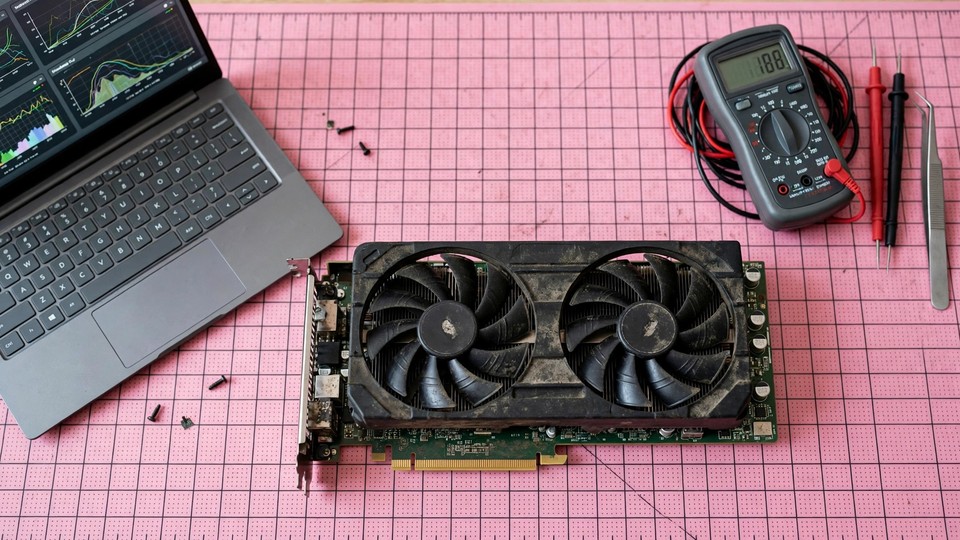
Buying a second-hand graphics card can be a sensible way to get a capable GPU without paying for a brand-new card. It can also be one of the easiest ways to lose money on hardware that never worked, was heavily modified, or fails weeks after the sale. The core risk is not simply paying too much. The core risk is buying the wrong item with nobody accountable for following up afterwards.
A second-hand card can carry four problems at the same time: a fake card, a mining card, a repaired card, or a description that does not match the real item. None of those problems can be judged from exterior photographs alone. They require software checks, stress testing, serial-number cross-checking, and proof of purchase to be assessed together.
The three buying routes compared here differ less in headline price than in who takes responsibility for verifying the card and who deals with problems afterwards. That difference in responsibility is the right basis for comparison, because an unverified listing and a tested, store-backed card are not the same product even when the model name looks identical. For any warranty, after-sales, or pricing detail, please enquire for details, subject to store announcement.
Three Different Traps: Fake Cards, Modified Cards, and Mining Cards
Second-hand GPU risk should be separated into three categories, because the detection methods and consequences are different for each.
The first category is fake cards and empty boards. These are not the claimed model at all, and in the most extreme cases they have no working computing function. The exterior can look convincing, but the card may produce no display output, or it may display specifications that are not real.
The second category is modified cards and non-original-specification cards. These may use a genuine GPU chip plus a third-party modified printed circuit board, changed memory capacity, or changed cooling. They may work, but they are no longer to NVIDIA original specification, so driver behaviour, stability, cooling, and after-sales arrangements are different.
The third category is mining cards and high-load retired cards. These may be genuine cards, but they have previously run under sustained high load. The risk concentrates on memory ageing, fan wear, ageing thermal pads, and a BIOS that may have been changed, rather than on the model name being false.
Before asking whether a deal is cheap, the first question is which category the card falls into, whether the seller has disclosed that clearly, and whether there is verifiable evidence to support the claim.
Fake Cards: Lessons From Reported High-Imitation Cases
Fake cards are not limited to one method. Reported cases include plastic dummy cores with scrap memory, lower-tier genuine chips that have been ground down and laser re-marked to impersonate a higher model, boards with no GPU or memory fitted at all, and genuine boxes paired with a swapped card inside.
In October 2026, multiple technology outlets reported a case in which a repair specialist in Russia, Vik-On, disassembled a second-hand “RTX 4090 faulty bare board” bought on the second-hand market. The reported purchase price was far below the normal reported market level for an RTX 4090 in the same market. Disassembly found that both the GPU core and the memory were fake. The GPU package looked highly realistic, with laser-engraved markings, and the repairer initially thought it might be a genuine engineering sample. Closer inspection found differences in substrate colour, reflectivity, and typeface compared with a genuine part, and after the chip was removed the contact pattern did not resemble a normal processor, while the solder mask began to peel during cleaning. One memory chip removed for inspection was found to be GDDR6 rather than the GDDR6X that an RTX 4090 should use, with a counterfeit Micron marking. The seller was reported to have several more similar boards on hand.
Another clue was in the die's date/lot code, which was read as implying a 2030 manufacture date — impossible for an RTX 4090, whose mass production began in 2022. (Note: 'AD102-300-A1' itself is the genuine RTX 4090 die designation; the '300' is a SKU variant, not a date. The suspicious part was the separate date code, plus differences in font, substrate colour/reflectivity, missing QR code on the substrate of genuine GPU packages, and capacitor layout.) Such details are useful only as supporting clues. Different batches and brands have different layouts and labels, so no single marking should be used alone to declare a card fake.
Later, the same repairer found a Shenzhen seller listing a similar imitation board at a very low price under a name resembling “NVIDIA GTX4090-24G”. The listing stated that the item was new but could not actually be used, and was suitable for parts, repair, board swapping, display, or spare stock, with no returns or exchanges. The key point is that the original seller disclosed that the board could not be used. The danger arises when such a board changes hands again without that disclosure, so the next buyer mistakes it for a repairable genuine faulty card.
Earlier methods were already documented before this batch. Previous cases involved using a genuine GA102 core from an RTX 3080 or 3090, modified to impersonate a 4090. The October 2026 batch was more extreme because it used plastic or metal substitutes for the GPU core and non-functional scrap chips for memory, effectively a carefully disguised empty board.
A separate high-imitation case involved laser re-marking of a genuine chip. In April 2026, a repair shop in the United States, Northwest Repair, disassembled an ASUS ROG Strix RTX 4090 that looked intact on the outside and found that both the core and the memory had been treated: original markings had been ground away and laser re-engraved as AD102-300-A1, and the memory chips had received the same grind-and-re-mark treatment. The board had been ultrasonically cleaned, the thermal pads looked intact, and there was no obvious sign of part replacement. The repairer described it as one of the most convincing fakes encountered, difficult to detect even with trained eyes, with soldering defects visible only under a microscope. The difference from a plastic dummy core is important: re-marked cards may use a lower-tier genuine chip to impersonate a higher model, while dummy-core boards have no computing function at all. Both share the same lesson: exterior inspection and a look at the cooler are not enough.
RTX 5090 fake and empty-board cases have also been reported. In June 2025, Northwest Repair disassembled a ZOTAC GeForce RTX 5090 and found that the GB202 chip and all GDDR7 memory were missing from the board. The buyer had paid a substantial sum to a seller in China, believing a bargain had been found. The report estimated that the chip and memory accounted for a large share of the cost of an RTX 5090, with the remaining parts worth far less on their own. The same report also mentioned parcel scams in which the box contained a backpack, rice, or pasta instead of a graphics card. Those are logistics and platform fraud rather than hardware technical issues, but the buyer still loses money, so delivery verification and traceable payment remain a necessary defence beyond hardware testing.
Another consumer case involved a buyer who purchased an MSI RTX 4080 Super described as shipped by Amazon and received an RTX 4070 Ti instead. The serial numbers on the box and the card appeared to match on the surface. The buyer used GPU-Z screenshots and other evidence to return the item immediately. The lesson is that matching serial numbers on the box and the card do not guarantee that the model is correct. GPU-Z readings plus benchmark comparison remain necessary.
Fake cards are often sold under the cover of “faulty card” or “repair project”. A buyer may assume the purchase is a genuine faulty card that can be repaired, and therefore accept a low price and a “no guarantee of function” condition. An unusually low price is itself one of the strongest warning signs. The October 2026 reporting made that point directly: a price far below the normal level should make a buyer cautious, not excited.
Useful precautions include asking the seller for clear photographs of the GPU core and memory chips, not only cooler exterior photographs. Compare chip markings and date codes with known genuine information, and look at substrate colour, reflectivity, typeface, solder mask condition, capacitor layout, and anti-counterfeit labels as supporting evidence. Priority should go to sellers with a verifiable history and to payment methods with buyer protection. Avoid large second-hand transactions with no return protection and no testing arrangement. Do not buy a bare board without a cooler as a repair gamble: without a cooler, a buyer cannot easily verify at handover whether the card produces display output at all.
Modified Cards: 4090D 48GB, 4080 Super 32GB, and Data-Centre Retired Cards
Modified cards deserve separate attention because they are easy to mistake for a bargain version of an original model.
Third-party workshops have modified RTX 4090 or 4090D cards to 48GB of memory. The method is not simply swapping in larger memory chips. Because GDDR6X single-chip capacity was limited at the time, the modification generally used a custom “clamshell” PCB that increased the memory chip count from 12 to 24, with memory fitted on both sides of the PCB, plus modified firmware so the memory controller recognised 48GB. A similar modification was reported for RTX 4080 Super 32GB. Cloud-compute provider AutoDL log screenshots were reported to show both a 4090D 48GB and a 4080 Super 32GB modified version, with memory doubled in both cases and the GPU itself reported as unchanged.
These modified cards are not NVIDIA original specification. The original RTX 4090 and 4090D both use 24GB GDDR6X as standard, and the original RTX 4080 Super uses 16GB GDDR6X as standard. Any card labelled “48GB 4090D” or “32GB 4080 Super” must be treated as a modified card, not understood as an original model.
The modification process involves desoldering the AD102 GPU and original memory from the original PCB and soldering them onto a custom PCB. That is board-level rework, and the process itself affects reliability. It is not merely “adding memory”.
Modified cards carry several risks. Warranty risk is severe, because modification can void the original warranty. Non-standard memory can raise driver compatibility issues, and stability under sustained heavy load is a documented concern. The modified firmware needed to recognise doubled memory may behave differently after future NVIDIA driver updates or after game or AI software updates. Cooling and power risks also change: doubling the memory chip count creates more heat points, and modified cards are commonly fitted with AIO liquid cooling or blower-style cooling, so original cooler data cannot be applied directly.
Reported sources describe a failure-rate figure quoted from a professional upgrade service, and a blower fan noise figure, but those figures come from a product page quoting a third party and were not independently verified. They are not industry-wide rates. The correct approach is to ask for the specific modification history and test evidence for the individual card, rather than relying on a single quoted figure.
Source-tracing risk is another issue. Data-centre retired cards may already have run under sustained high load before modification, giving a “retired plus modified” double history. Reporting on Chinese data centres refurbishing and reselling RTX 4090D GPUs described data centres selling assets to recover funds quickly. The same reporting noted uncertainty about whether those cards had actually been used. In other words, “retired card” does not mean “brand new and unused”, and it does not mean “necessarily worn out”. Each card must be verified individually.
Pricing language matters here. Reported figures for modified cards are asking prices or reported prices, not completed-sale prices. One review of eBay listings explicitly stressed that the figures shown were asking prices, not completed sales. Asking prices should never be treated as market prices, and a single seller asking price should never be treated as a completed-sale price. For the same reason, the channels are compared on verification and after-sales responsibility, not on price. Please enquire for details, subject to store announcement.
When a listing shows “48GB 4090D”, “48GB 4090”, “32GB 4080 Super”, or any specification beyond original specification, the first reaction should be to identify it as a modified card. Ask the seller to state in writing whether it is third-party modified, how it was modified, whether the PCB is custom, whether cooling was changed, and whether firmware was changed. Ask for a GPU-Z screenshot plus long-load test records, such as FurMark, OCCT, or 3DMark stress-test results, and memory temperature records. Idle temperature alone is not sufficient. Do not judge a modified card by the same “normal temperature” or “normal benchmark” standard as an original card, because its cooling and firmware are already different. After-sales arrangements must be confirmed clearly. Please enquire for details, subject to store announcement.
Mining Cards: How to Read the Signs Without Overclaiming
Mining cards are genuine cards that have commonly run 24/7 under high load. That sustained load accelerates wear on memory and fans. The point is not that every mining card is broken. The point is that wear accumulates faster than on a typical gaming card, so each card must be checked individually.
Common physical clues reported include heavy dust accumulation, especially around the cooler and fans; damaged or missing case screw seals, suggesting the card may have been opened or run in a harsh environment; scratches, installation marks, or other physical damage that may indicate mining-farm use; and a card that looks as though it came directly from an industrial environment or a dedicated warehouse. Fans may have been replaced: miners sometimes swap original fans for third-party fans to improve cooling, so checking whether fans are original and consistent is a useful clue. BIOS may have been changed: miners commonly modify BIOS settings to optimise mining, such as clock and power limits. Memory clocks may have been overclocked, because mining commonly pushes memory clock and GPU frequency to raise computing power.
None of those clues alone proves mining. Multiple sources stress that the clues show usage intensity and maintenance quality, not a definitive mining history. Conversely, a clean exterior does not prove a card was never mined, because a seller can clean the exterior. Ultrasonic cleaning can make an old board look new. Judgement should rest on measured condition, not on the seller’s stated use.
It is also important not to treat “mining card” as an automatic rejection. Published guidance notes that not every mining card is a bad card. If a mining card has display output, no hardware damage, and a normal BIOS, it may still work normally for gaming, provided the checks are completed. On the other hand, if a mining card has been modified in a way that prevents gaming, another option should be considered. The focus should be on current hardware condition, not on the label.
The handover-site exterior checklist is useful for all channels: look at the PCB for oxidation, discolouration, abnormal solder joints, bulging or leaking capacitors, and oxidised or scratched connectors; check fans for smooth rotation, abnormal noise, broken or deformed blades, matching fan models on both sides, and third-party replacement traces; check HDMI and DisplayPort connectors for oxidation, looseness, or abnormal pins, and check the PCIe gold fingers for severe scratches, oxidation, or repeated insertion marks; check screws for stripping, mixed batches, and damaged or missing seals; check thermal pads for displacement, drying, cracking, or oil seepage, and check thermal paste for drying to powder; and note any burnt or chemical smell as a supporting clue, without relying on smell alone. Thermal pad and paste ageing are repairable wear, but they still reflect maintenance condition.
Model Precision: 4090 Is Not 4090D, and 5090 Is Not 5090D V2
Model names that look similar can hide large specification differences. Original specifications are summarised in the model-precision table. Any listing that exceeds these original specifications must be treated as a modified card.
| Model | GPU | CUDA Cores | Memory (Original Specification) | Bus Width / Bandwidth | Notes |
|---|---|---|---|---|---|
| RTX 4090 | AD102 | 16,384 | 24GB GDDR6X | 384-bit / 1,008 GB/s | Global flagship; TGP around 450W |
| RTX 4090D | AD102 (cut-down version) | 14,592 | 24GB GDDR6X | 384-bit / 1,008 GB/s | China-market version; Tensor cores 456 (4090 has 512), RT cores 114 (4090 has 128), TGP around 425W; overclocking limits are stricter |
| RTX 4090D 48GB | AD102 (cut-down version) plus third-party modification | 14,592 (GPU itself unchanged) | 48GB (third-party modification, not original) | Depends on modified PCB | Modified card, not an original model |
| RTX 5090 | GB202-300 | 21,760 | 32GB GDDR7 | 512-bit / 1,792 GB/s | Global flagship; AI TOPS around 3,352 |
| RTX 5090D | GB202-250 | 21,760 | 32GB GDDR7 | 512-bit / 1,792 GB/s | China-market version; AI TOPS firmware-limited to around 2,375 |
| RTX 5090D V2 | GB202-240 | 21,760 | 24GB GDDR7 | 384-bit / 1,344 GB/s | China-market V2 version; CUDA cores identical to 5090, but memory reduced from 32GB to 24GB, bus width reduced from 512-bit to 384-bit, bandwidth reduced by around 25%; AI TOPS remains around 2,375; TGP around 575W; launched in China in August 2025 |
Three distinctions matter most. The 4090D is not simply another name for the 4090. It is a cut-down core. Memory capacity and bandwidth are the same, but CUDA, Tensor, and RT core counts and TGP differ. The 5090D V2 is not simply a cheaper 5090. Its CUDA core count matches the 5090, but memory and bandwidth are cut. Reported testing found gaming performance differed from the 5090D by only a small margin (around 1–2%), while memory-bandwidth-bound professional and AI workloads showed a larger gap. Any listing that claims “4090D 48GB”, “4080 Super 32GB”, “5090 48GB”, or another specification beyond original specification must be treated as a modified card and must not be compared against original-specification benchmark or temperature data.
How to Test a Card: GPU-Z, FurMark, 3DMark, and Memory Testing
Testing should follow a sequence: confirm identity first, then check memory, then check benchmark performance, then check sustained-load stability, then check real-application behaviour. A card that passes one stage can still fail a later stage.
GPU-Z: Identity Check
GPU-Z is a free lightweight tool from TechPowerUp that requires no installation. It displays GPU name, chip model, process, memory capacity and type, bus width, clocks, driver version, PCIe interface, and related data. The Sensors tab shows live temperature, clocks, fan speed, power consumption, and related readings. For GDDR6X cards, GPU-Z includes a Memory Temperature reading that is less common in other monitoring tools.
GPU-Z also compares the data provided by the BIOS with internal GPU information. If the two do not match, it shows a yellow warning icon and prefixes the name with [FAKE]. That function is aimed mainly at older cores impersonating newer cards. Early GPU-Z fake-card detection covered older cores such as G84, G86, G92, G94, G96, GT215, GT216, GT218, GF108, GF106, GF114, GF116, GF119, and GK106. That list belongs to older versions and should not be mistaken for proof that GPU-Z can automatically identify every high-imitation 4090 fake board in 2026.
GPU-Z has clear limits. Some fake cards change VBIOS to report false specifications, so GPU-Z output cannot be trusted on its own. GPU-Z may not catch BIOS impersonation, so Device ID, core count, memory bus width, and benchmark results must be cross-checked against official specifications. More fundamentally, for a plastic dummy-core empty board, the card will not produce normal display output and will not be recognised by the system, so GPU-Z has nothing to read. GPU-Z can only test a card that enters the system and is recognised as a device. It cannot test a card that produces no display at all. “GPU-Z shows no warning” does not equal “genuine card”.
The GPU-Z checklist should cover model name against the seller’s claim; GPU code name, for example RTX 4090 should show AD102; memory type and capacity, because GDDR5 impersonating GDDR6 and inflated capacity are common tricks, and memory type is harder to fake; bus width and bandwidth, because a card with halved bus width shows a large performance gap; core and Boost clocks compared with official reference parameters, where a large gap may indicate a low-clock version or cooling limitation; BIOS version, where an abnormal date or confused version is often a clue to a refurbished card; BIOS comparison, where the current BIOS is backed up with GPU-Z and compared with the brand’s original BIOS; bus interface, where GPU-Z shows current PCIe bandwidth, and a card in a second slot may run at reduced bandwidth and produce a misleadingly low benchmark; and temperature sensors, where abnormally high idle temperature or unexplained high fan speed can be a warning sign. Idle-temperature norms differ by model and case airflow, so no single idle-temperature number should be used to pass or fail a card.
BIOS handling needs caution. Backing up BIOS for comparison is useful, but do not flash BIOS without familiarity. Incorrect flashing can brick a card. If BIOS tampering is suspected, please enquire for details from a professional repairer, subject to store announcement.
FurMark: Stability and Cooling Under Load
FurMark pushes a graphics card close to its load limit and is used to observe sustained full-load behaviour, including full-load temperature, whether clocks keep dropping, and whether artefacts, black screens, or driver resets occur. FurMark is not a one-run pass test. It is a way to observe stability under sustained full load. GPU-Z Sensors should be open at the same time to record temperature, clocks, fan speed, and power consumption, and to watch for sudden clock drops, temperature spikes, artefacts, black screens, or driver resets.
Any of the following should be treated as a fail or as requiring further inspection: artefacts, flicker, colour blocks, black screen, driver crash, system restart, uncontrolled temperature rise, or a sudden increase in fan noise.
Before testing, confirm power is fully connected. High-end cards need multiple 8-pin or 16-pin power inputs, and a missing input can trigger a power limit directly. Check that power cables are firmly seated and avoid using adapter cables where possible. Confirm the driver is an official stable version, because an outdated or very new driver can affect scores and stability. FurMark itself is safe when used according to safety guidance, but that does not mean it can be run indefinitely without regard to temperature.
FurMark is an extreme load and does not fully equal gaming load. It must be paired with 3DMark and real game or application testing to judge whether a card can game and whether it can keep gaming for a long session.
3DMark: Benchmark Comparison
3DMark is one of the most widely used graphics-card benchmarks, with common scenes including Fire Strike and Time Spy. Before benchmarking, close unnecessary background programs and game-recording software to avoid consuming GPU resources, confirm the display resolution is correct, and record the Graphics Score rather than the total score. The total score includes CPU results and is less useful for judging GPU performance. The same card produces non-comparable scores at different resolutions, so test conditions must match when comparing.
After obtaining a score, compare it with the average result for the same model from other users. One tutorial suggests investigating when the gap exceeds a large margin, but that margin is a tutorial suggestion, not an official standard. Different test versions, drivers, CPUs, and resolutions all affect scores, so comparison requires similar conditions.
Mining cards may benchmark lower because long-term 24/7 operation can cause lasting damage and reduce performance, but some mining cards show no obvious benchmark difference, especially after short mining periods with adequate cooling. A normal benchmark does not prove a card was never mined. A low benchmark does not prove mining either, because cooling, power supply, slot bandwidth, and driver issues can also lower scores.
Benchmarking should follow identity confirmation: confirm GPU-Z identity first, because a benchmark score is meaningless if the identity is wrong. Record full test conditions, including test version, resolution, driver version, CPU model, power supply wattage, and case airflow. Do not record only one number. When a benchmark is low, check in order: slot bandwidth, whether power is fully connected, driver version, cooling and power supply, and then consider hardware problems. A 3DMark stress test can also be used to judge stability. Some guidance suggests pairing OCCT VRAM testing, 3DMark stress testing, and short FurMark testing, with HWiNFO recording power consumption, to expose faulty memory or power-supply problems.
Memory Testing: Temperature, Artefacts, and Errors
Memory faults commonly appear as artefacts, colour blocks, flicker, and driver crashes. GPU-Z Memory Temperature is especially important for GDDR6X cards. OCCT VRAM testing or MemTest-type tools are recommended for memory testing, alongside GPU-Z Device ID and memory cross-checking and power-consumption comparison.
Memory testing is not a one-run guarantee. Some memory problems appear only at high temperature, under high load, or at specific memory addresses, and require long, repeated testing to catch.
Memory testing should look at three things together: memory temperature, whether artefacts or colour blocks appear, and whether the test reports errors or stops. If memory temperature is abnormally high, or artefacts appear during testing, the card should be treated as high risk even when the benchmark looks normal. If a seller refuses memory testing, or only agrees to a few minutes of short testing, that should raise caution and justify asking for a full test or walking away.
Physical Disassembly Inspection: What It Can and Cannot Prove
Disassembly inspection can reveal what software testing cannot: PCB oxidation, burn marks, repair traces, bulging or leaking capacitors, reworked or cold solder joints, flux residue, displaced or dried thermal pads, and worn fan bearings. Disassembly also carries risks: removing the cooler can affect after-sales arrangements, can damage the card, and can cause a seller to refuse a return. Disassembly must be agreed with the seller in advance and performed by an experienced person. For after-sales arrangements, please enquire for details, subject to store announcement.
Disassembly is not a guarantee. In the October 2026 high-imitation case, even after the cooler was removed and thermal paste cleaned, the repairer initially thought the board might be a genuine engineering sample. Confirmation required chip-level disassembly. Seeing a normal exterior after disassembly does not prove a card is genuine.
At a handover site, do not disassemble a card immediately. Disassembly should take place in a suitable environment with proper tools, anti-static measures, and good lighting, with photographs recording the pre-disassembly condition. The inspection should cover both sides of the PCB, GPU packaging, memory chip markings, capacitors, solder joints, thermal pads, fans, connectors, gold fingers, and screws. Visible rework on solder joints, bulging capacitors, PCB burn marks, or displaced thermal pads should be treated as high risk, with further explanation required or the transaction abandoned. Do not attempt high-risk operations such as heat-gun reflow or oven repair at a handover site. Those operations require professional experience, ventilation, and anti-static protection and are not suitable for a general buyer at handover.
Common Second-Hand Card Faults
Artefacts appear as colour blocks, lines, flicker, noise, or texture errors. Possible causes include memory faults, GPU core faults, driver problems, poor cooling, unstable power, or poor connector contact. Diagnosis involves changing driver version, changing connector or cable, changing slot, running memory testing, and running FurMark or 3DMark stress testing to see whether artefacts recur. Artefacts only under high load often point to hardware. Artefacts at idle may indicate a more serious problem.
Driver drops appear as sudden black screens, frozen images, a message that the display driver stopped responding and recovered, or system restarts during gaming or testing. Possible causes include driver and hardware mismatch, modified BIOS, memory faults, insufficient power, excessive temperature, or unstable GPU core. Diagnosis involves recording temperature, power consumption, and clocks at the time of the drop, trying an official stable driver, checking power wiring, checking whether BIOS was changed, and running long stress testing to see whether the drop recurs. Device Manager error codes such as Code 43 or Code 12 can provide clues, but no single error code should be used alone to identify the faulty part.
Fan noise and poor cooling appear as friction sounds, buzzing, intermittent fan stops, abnormal speed, high full-load temperature, or sustained clock drops. Possible causes include bearing wear, deformed blades, dust, ageing thermal pads, dried thermal paste, poor case airflow, or a replacement fan that does not match. Diagnosis involves recording fan speed and temperature with GPU-Z or HWiNFO, checking smooth fan rotation, checking cooler dust, and checking paste and pad condition.
Memory faults appear as artefacts, colour blocks, driver crashes, abnormal benchmarks, or memory-test errors. Possible causes include ageing memory chips, overheating, cold solder joints, poor modification rework, or fake memory. Diagnosis uses GPU-Z memory type and capacity checks, OCCT VRAM or MemTest-type tools, memory-temperature monitoring, and long stress testing.
Modified BIOS is common in mining cards. Signs include GPU-Z readings that differ from official specifications, abnormal BIOS version dates, large benchmark gaps against the same-model average, and abnormal behaviour after a driver update. Possible causes include miners changing BIOS for clock and power limits, modified cards changing firmware to recognise doubled memory, or fake cards changing VBIOS to impersonate a higher model. Diagnosis uses GPU-Z BIOS backup and comparison with the brand’s original BIOS, checking for a GPU-Z [FAKE] warning, and cross-checking Device ID, core count, bus width, and benchmark results. Do not flash BIOS without familiarity. Unauthorised flashing can affect after-sales arrangements, and incorrect flashing can make a GPU unusable. Please enquire for details from a professional, subject to store announcement.
Three Channels Compared: Certified Second-Hand, Carousell Individual Sellers, and Taobao Self-Purchase
Carousell Individual Sellers: Highest Risk, Buyer Carries Verification
Carousell is a classified buying-and-selling platform where sellers list second-hand goods as individuals. The platform provides listing, search, private messaging, and some payment functions, but a general individual seller’s graphics-card listing does not equal a platform-tested, certified, or guaranteed card. The buyer deals with an independent individual, not a shop with a fixed after-sales process.
The main advantage is the possibility of face-to-face inspection. Carousell official safety guidance also recommends meeting in person, noting that meeting can avoid parcel damage during delivery and let the buyer confirm the goods in person. For graphics cards, the real value of meeting is not looking at the exterior. It is the chance to ask for on-site power-on testing, GPU-Z checks, and temperature observation. If the seller refuses any on-site testing, the value of meeting drops sharply. Individual listings also update quickly, cover a wide range of models, and make it easier to find discontinued older models. Price can be negotiated directly between buyer and seller, but negotiation is not protection. A low negotiated price does not help if problems emerge later and the buyer must chase the seller alone.
The disadvantages are substantial. Individual sellers generally do not provide a systematic test report and do not guarantee long-term stability. If artefacts, clock drops, or memory errors appear weeks after the sale, it is difficult to ask an individual seller to follow up. Fake-card risk is real: common methods include using an old core to impersonate a new model, or modifying BIOS so the system displays the wrong model. GPU-Z can help check GPU name, device number, memory capacity, memory type, and bus width against official specifications, but BIOS impersonation can distort a single software display, so core count, bus width, and benchmark performance must be checked together.
Mining-card risk applies here as well. The clues listed earlier show usage intensity and maintenance quality, not proof of mining, and a clean exterior does not prove a card was never mined. Judgement should rest on measured condition, not on the seller’s stated use.
Description mismatch and swap risk are also common. Reported tricks include using online images instead of real photographs, refusing to provide serial-number photographs, refusing immediate testing, and asking to move off-platform for cash or private transfer. A second-hand GPU verification guide warns that cash handover and irreversible transfers shift all risk to the buyer, while transactions with buyer protection and a return period place more risk on the seller.
Buyer-protection coverage is limited, and face-to-face cash transactions are generally not covered. Carousell official guidance states that Buyer Protection applies only to transactions that use the platform “Buy” button, meaning the platform payment function. The platform also states that transactions conducted outside the platform are not protected. Carousell Help Centre guidance also notes that transactions without Buyer Protection carry higher risk, with payment usually made directly between buyer and seller and often outside the platform. In other words, the most common Hong Kong pattern — private message, arrange a meeting, cash on handover — should not be assumed to carry platform intervention if a dispute arises.
The dispute window is short, and the burden of proof sits with the buyer. Under Carousell Hong Kong Terms of Service, a buyer must raise a dispute within a specified dispute window through the order details page. For a graphics card, where problems may require sustained stress testing to expose, a short window means testing must happen immediately after receipt, not later.
Phishing and off-platform fraud are also relevant. Carousell Help Centre guidance notes that scammers try to lure buyers off-platform, get them to click unknown links, or provide personal or banking details. The platform has reported intercepting large volumes of messages containing links, email addresses, and QR codes and blocking large numbers of suspicious accounts. Those figures are platform self-reports, not independent audit results, but they confirm that moving communication off-platform is recognised as high-risk behaviour. All trading should stay inside the platform, and links sent privately by a seller should not be clicked.
Carousell individual sellers should be positioned as the highest-risk channel, not the cheapest choice. Carousell prices should not be used for comparison. There are two reasons. First, an individual seller’s asking price does not represent a verified equivalent product, so comparing an unverified asking price with a tested certified second-hand card compares goods of different quality. Second, Carousell asking prices fluctuate widely, and an extremely low asking price may itself be a fake card, mining card, repaired card, or scam listing. Quoting those prices only amplifies the misleading effect.
Meeting in person does not equal safety. Meeting only reduces transport damage and swap disputes. It does not automatically verify fake cards, mining cards, or memory problems. Meeting must include on-site power-on testing, otherwise it merely changes the location of an unprotected transaction.
Carousell should not be the first choice unless the buyer already knows how to test a card with GPU-Z, stress testing, and memory testing, and is willing to accept a “no after-sales” outcome. Any seller who asks to move communication off-platform, move payment off-platform, click an unknown link, or provide banking or one-time-password details should be treated as high risk and the transaction stopped immediately. If meeting is pursued, the buyer must agree in advance on on-site power-on testing, GPU-Z specification checks, stress testing for temperature and stability, and serial-number and proof-of-purchase checks. A seller who refuses any of those should be treated as a warning sign, not as a busy seller. After receipt, testing must happen immediately. The dispute window and burden of proof sit with the buyer.
Taobao Self-Purchase: Wide Choice, Buyer Carries Cross-Border Cost and Risk
Taobao self-purchase means a Hong Kong buyer buys directly from a Mainland shop or seller on Taobao and receives the card through consolidated shipping or direct delivery to Hong Kong. The nature of the channel is cross-border personal online shopping. The buyer must handle three tasks at once: distinguishing genuine from fake goods, handling cross-border logistics, and handling cross-border after-sales. If any link fails, the cost falls on the buyer.
The advantages are real. Taobao brings together a large number of shops, so model, brand, condition, and accessory combinations cover a wide range. For older models that are hard to find in the Hong Kong local market, Taobao may still have supply. Taobao shops generally have ratings, sales volumes, and reviews that buyers can use for initial screening. That is an important difference from a purely individual seller: a shop has a continuing public trading record, while an individual seller may have only scattered listings. The platform transaction flow also provides basic order: payment through the platform, logistics through the platform, and refunds applied through the platform give at least a traceable transaction record. Buyers should keep all conversations, orders, logistics records, and unboxing evidence, and should not delete conversations or confirm receipt in a hurry.
The disadvantages are equally real. Shop ratings do not mean every second-hand card has been independently tested. Fake cards, refurbished cards, repaired cards, and mining cards come from a mature industrial chain, and buyers have shared experiences of buying mining cards that were heavily repaired and then disguised as personal cards with no disassembly or repair. AI-generated images and video make it harder for an ordinary buyer to judge hardware condition from seller-provided condition photos or test videos alone. Taobao buyers must assume that images and videos can be fabricated and must re-test the card themselves after receipt.
High-value cards deserve extra caution. Graphics cards are high-value, specification-complex hardware, with large fake-card profit margins and strong impersonation incentives. The higher the model tier, the less a buyer should rely on asking price and photos alone. Serial-number photographs, GPU-Z screenshots, and stress-test clips should be requested, and the card must be re-verified immediately after receipt. Any listing with a price far below a reasonable level should be treated as a warning sign, not as a bargain.
Taobao prices fluctuate widely and need to be re-verified. Second-hand graphics-card prices are affected by new-card supply, memory market conditions, and supply and demand, and Taobao asking prices can move sharply in a short period. Second-hand market analysis notes that the price gap between second-hand and brand-new cards was compressed in some periods, reducing the value advantage of second-hand buying. No Taobao asking price from one point in time should be quoted as “market price”. If a price trend is mentioned at all, the verification date must be stated, and the price must be described as for reference only and re-verified before purchase. Taobao asking prices must not be compared directly with certified second-hand prices, because verification level and after-sales responsibility differ.
Logistics costs are easy to underestimate. A Hong Kong buyer buying a graphics card through Taobao generally pays Mainland-segment delivery plus consolidated shipping or direct delivery to Hong Kong. Consolidated shipping is generally charged by weight, and a card plus packaging has real weight, so the buyer should include all logistics costs before ordering, not only the product asking price. Logistics also carries damage, loss, and insufficient-packaging risks. On receipt, the outer packaging should be checked immediately, and unboxing should be recorded on video throughout.
Tariff language needs precision. Hong Kong is a free port. In general, most goods imported into Hong Kong do not require payment of a general tariff, and there is no value-added tax or sales tax. That point comes from multiple public Hong Kong import guides. For “Taobao delivered to Hong Kong”, Hong Kong buyers do not need to pay import tariff. The accurate warnings are different: if a buyer uses a Mainland address, Mainland transshipment, or brings goods into the Mainland, Mainland tax and customs arrangements may apply, and the two situations must not be confused; even though Hong Kong itself does not charge a tariff, delivery fees, consolidated shipping fees, return delivery fees, packaging, and insurance remain real costs; and individual controlled or dutiable goods have separate arrangements, with Hong Kong Customs announcements as the authority.
Return difficulty is the most practical disadvantage. Even where a platform return mechanism exists, a Hong Kong buyer returning goods to the Mainland often must first pay cross-border return delivery costs and handle seller refusal, who pays return delivery, and refund timing. Hong Kong forum experience notes that return delivery costs should be agreed in advance, otherwise a seller may refuse receipt because return delivery is expensive, the goods may be returned to Hong Kong, and the buyer may have to pay again to redeem them. Another Hong Kong user shared a Taobao refund experience in which the platform required the disputed goods to be returned to a Mainland address, with Hong Kong-to-Mainland return delivery paid first by the buyer, followed by further dispute over delivery costs and refund. That account is a single case and cannot be generalised to all cases, but it reveals a structural issue: cross-border return delivery, time, and evidence costs all fall on the buyer.
A seven-day return should not be assumed to apply automatically to second-hand graphics cards. Mainland consumer-protection law has a seven-day no-reason return system, and Taobao commonly refers to seven-day no-reason return in a Mainland context. However, second-hand goods, individual shop return terms, product condition, and whether resale is affected can all affect actual return arrangements. A Hong Kong buyer should not assume every Taobao second-hand card can be returned without reason in seven days. Before ordering, the buyer must read each shop’s return terms carefully and note who pays return delivery. Return arrangements are subject to the individual shop’s announcement. Please enquire for details.
There is generally no Hong Kong warranty. A card bought through Taobao generally has no Hong Kong local warranty or after-sales contact point. Even if the card itself remains within the original manufacturer warranty period, whether warranty terms apply to cross-border purchases, whether original proof of purchase is needed, and whether coverage is limited to the original purchase region must be verified card by card and brand by brand. Do not assume “a receipt equals Hong Kong warranty”. Second-hand market guidance warns that most second-hand card original warranties generally apply only to the original buyer, and after resale the buyer may not be able to claim directly from the manufacturer. Taobao self-purchase buyers should assume after-sales must be handled by themselves and should ask the seller about warranty status before purchase.
Cross-border rights protection has a high practical threshold. If a Hong Kong buyer has a dispute with a Mainland seller, handling it through Mainland consumer protection, platform intervention, or Mainland litigation can be difficult in practice. A Hong Kong user share notes that some Mainland rights-protection channels require a Mainland identity card for registration, Hong Kong residents can only handle matters by complaint, and platform mediation results may not satisfy the buyer. That account is a single case and does not represent every Hong Kong buyer’s experience, but it warns that cross-border transaction recovery costs differ from local shop transactions. Keeping complete evidence — conversation screenshots, orders, logistics records, unboxing video, and test results — is the basic requirement for cross-border rights protection.
Electrical safety and specification differences need a general reminder. The Hong Kong Consumer Council has reminded buyers that cross-border electrical purchases may involve different safety standards between the Mainland and Hong Kong, such as plug specifications and wiring requirements. A graphics card itself carries no plug, so that point does not apply directly, but if a buyer also purchases a power supply, adapter cable, socket, or similar accessory, Hong Kong three-pin plug standards and safety requirements should be noted, and plug replacement should be handled only by a qualified person. Cross-border electrical accessory purchases should note Hong Kong safety standards. Please enquire for details.
Taobao shops and Goofish must be kept separate. Taobao shops have a rating system, while Goofish is dominated by individual sellers. Goofish is not a recommended channel here, and Goofish prices should not be used for comparison. “Taobao self-purchase” means Taobao shops only, not Goofish individual sellers. That distinction matters because readers can easily treat “Taobao” and “Goofish” as the same “Mainland second-hand market”. They are not.
Taobao self-purchase advice can be summarised as follows: consider only Taobao shops with complete ratings, long operating records, and clear return terms, and do not rush an order because of one extremely low asking price; before ordering, ask whether the card is new, second-hand, refurbished, or repaired, whether it has been disassembled or repaired, whether it has a mining history, whether proof of purchase exists, what the return terms are, and who pays return delivery, and save screenshots of the seller’s replies; on receipt, record unboxing on video throughout, check model, serial number, exterior, and accessories, then immediately run GPU-Z, stress testing, and memory testing; do not confirm receipt in a hurry, because dispute and refund difficulty rises after confirmation; include return delivery and time costs in the budget, not only the product asking price and inbound delivery cost; and if the buyer does not know how to test a card, does not want to handle cross-border returns, or is buying a high-value card, the risk-return balance of Taobao self-purchase may be poor, and a store-guaranteed certified second-hand channel should be considered first.
Certified Second-Hand: Store Takes Verification and After-Sales Responsibility
Certified second-hand is not simply another second-hand listing. It is a transaction model in which the shop takes verification responsibility and after-sales responsibility. The core value is that the shop provides its own guarantee to the customer. The guarantee comes from the shop itself, not from the manufacturer, the platform, or an individual seller. The buyer pays not only for a card, but also for the shop’s testing, screening, and after-sales follow-up.
Three concepts must be kept separate. “Used” generally means a card that has been used before, with no implication of testing or guarantee. Individual sellers’ second-hand cards generally fall into this category. “Refurbished” generally means a card that has been inspected, tested, cleaned, and where necessary repaired before resale. Refurbishment quality depends entirely on who performed it: original-manufacturer refurbishment, well-known retailer refurbishment, and professional repair-shop refurbishment can follow very different processes and standards. Buyers should ask who performed the testing, what items were included, and whether test results have a written record. “Certified second-hand”, in this context, means a second-hand card tested by the shop, guaranteed by the shop, and followed up by a physical shop. The key is not the word “certified”. It is whether the shop is willing to stand behind the card in its own name. If a shop writes “certified” but refuses to explain testing items and after-sales arrangements, the buyer should treat the card as ordinary second-hand, not certified second-hand.
A second-hand market guide ranks purchase-channel safety as: original-manufacturer refurbishment, opening-box or certified refurbishment from a major retailer, a reputable professional refurbishment dealer, a local seller who allows on-site testing, and anonymous marketplace listings. The ranking logic is not “who is cheapest”. It is “whose verification and after-sales are most complete”. Certified second-hand derives its value from that position.
The advantages start with shop testing. The core process for certified second-hand should include shop testing of each card. Testing items are subject to shop announcement. Please enquire for details. Before purchase, buyers should ask the shop to state which items are tested, for example exterior inspection, GPU-Z specification checks, stress testing, temperature monitoring, memory testing, and fan and power-supply checks. A shop that can state its testing items clearly is itself a credibility signal. A shop that cannot state its testing items should raise caution.
Shop warranty or shop guarantee is the second advantage. Certified second-hand after-sales comes from the shop, not automatically from the original manufacturer. Second-hand market guidance warns that most second-hand card original warranties generally apply only to the original buyer, and after resale the buyer may not be able to claim directly from the manufacturer. Certified second-hand fills that gap: the shop provides after-sales arrangements in its own name. Specific warranty scope, duration, and claim process are subject to shop announcement. Please enquire for details. No specific warranty duration, coverage, or claim promise should be assumed unless written confirmation has been obtained from the shop with source and date noted.
A physical shop is the third advantage. Its value is not “there is a shop to look at”. It is “there is a fixed, traceable after-sales contact point”. A buyer can visit the shop in person, see the card, ask clearly about testing and after-sales arrangements, and know whom to contact and where to follow up if problems arise. Compared with an individual seller who can delete an account at any time, or a Taobao seller who can delay a cross-border dispute, a physical shop’s recovery path is clearer. A physical shop alone does not automatically mean protection. Buyers should still keep receipts, test records, and written after-sales terms.
After-sales protection is the fourth advantage. Certified second-hand after-sales arrangements should include a clear process for what happens when a problem arises, such as how to contact the shop, how to send the card for inspection, and how to judge whether a fault is a hardware fault or human-caused damage. The specific process is subject to shop announcement. Please enquire for details. Before purchase, buyers should ask about the after-sales process and keep the shop’s written reply.
The fifth advantage is reduced buyer verification burden. Individual sellers and Taobao self-purchase both require the buyer to test the card personally. Certified second-hand shifts verification responsibility to the shop. For buyers who do not know how to test a card, do not want to run stress tests themselves, or do not want to handle cross-border returns, that shift is the largest value. Buyers should still perform basic checks on collection, but they do not need to carry all verification responsibility alone.
Certified second-hand also has honest limits. Choice may be smaller. Certified second-hand requires the shop to test and screen each card, so not every model and condition will be in stock. Buyers may need to wait for a suitable model to return to stock rather than buying the desired model immediately. Model and stock availability are subject to shop announcement. Please enquire for details.
Asking prices cannot be compared directly with unverified second-hand asking prices. A certified second-hand price includes testing, screening, guarantee, and after-sales follow-up costs. Comparing a certified second-hand price directly with a Carousell individual seller or Taobao unverified second-hand card price ignores differences in verification and after-sales responsibility. The comparison should state that point rather than ranking the three channels by asking price.
“Certified” is not a uniformly regulated label. Different shops can define “certified”, “tested”, and “refurbished” differently. Buyers should not look only at the word “certified”. They should ask about testing items, guarantee scope, and after-sales process, and request written confirmation. If a shop refuses written confirmation, the buyer should treat the card as ordinary second-hand, not certified second-hand.
Original-manufacturer warranty and shop guarantee are two different things. Buyers should not mistake “shop guarantee” for “original-manufacturer warranty remains valid”. The provider, coverage, and claim process may differ. Before purchase, buyers must ask: what is the original-manufacturer warranty status of this card, what does the shop guarantee cover, and how do the two divide responsibility? Specific arrangements are subject to shop announcement. Please enquire for details.
Before purchase, buyers should ask four questions and request written confirmation: what items does testing include; what situations does the shop guarantee cover; what is the after-sales process; and what is the original-manufacturer warranty status? Specific arrangements are subject to shop announcement. Please enquire for details. On collection, basic checks should still be performed: model, serial number, exterior, and accessories should be checked, and receipts and written after-sales terms should be kept. Do not judge by the word “certified” alone. If a shop cannot state testing items and after-sales arrangements clearly, do not treat the card as certified second-hand. For buyers who do not know how to test a card, do not want to handle cross-border returns, or are buying a high-value card, certified second-hand is the channel with the clearest verification and after-sales responsibility among the three channels.
| Comparison Item | Carousell Individual Sellers | Taobao Self-Purchase (Taobao Shops) | Certified Second-Hand (Store Guarantee) |
|---|---|---|---|
| Who carries verification responsibility | Buyer | Buyer | Shop (subject to store announcement, please enquire for details) |
| Who carries after-sales responsibility | Individual seller; practical follow-up is difficult | Mainland shop; cross-border follow-up is difficult | Shop, with physical-shop follow-up (subject to store announcement, please enquire for details) |
| Test report | Generally none | Generally no independent test report | Shop testing (items subject to store announcement, please enquire for details) |
| Fake-card / mining-card risk | High; buyer must identify problems personally | High; buyer must identify problems personally, with high cross-border return cost | Lower, because of shop testing and guarantee, but buyers should still ask about testing items |
| Buyer-protection coverage | Face-to-face cash is generally not covered by platform Buyer Protection | Platform transaction provides a basic process, but cross-border rights protection has a high threshold | Subject to the shop’s announced after-sales arrangements, please enquire for details |
| Return difficulty | High; individual-seller follow-up is difficult | High; cross-border return delivery and time costs fall on the buyer | Subject to the shop’s announced after-sales arrangements, please enquire for details |
| Range of choice | Wide; individual listings update quickly | Wide; shop choice is broad | May be smaller; stock subject to store announcement, please enquire for details |
| Suitable buyers | Buyers who know how to test cards and accept no-after-sales risk | Buyers who know how to test cards and accept cross-border logistics and return handling | Buyers who do not know how to test cards, do not want cross-border returns, and value after-sales follow-up |
The comparison table contains no asking prices, because verification level and after-sales responsibility differ across the three channels, and direct price comparison would mislead readers.
Price-Comparison Platforms: Why a Listed Price Is Not a Market Price
Price-comparison platforms aggregate merchant quotes. price.com.hk is an example of such a platform. Their nature is quote aggregation, not a live stock system. A merchant quote can diverge from reality for many reasons: the merchant has not updated the quote, the item is sold out, the merchant is temporarily offline, the quote belongs to parallel-import stock rather than authorised stock, or the quote applies only to specific conditions. Buyers should not treat a price-comparison platform quote directly as a live market price.
No independently verified live stock count is published for price-comparison platforms, so buyers should confirm stock directly with the merchant before relying on any quote. The general warning stands without invented figures: if a quote corresponds to an offline merchant, out-of-stock goods, or an expired quote, it is not a real transaction option. Comparing a “cannot buy” quote with a certified second-hand card that can be bought immediately produces a false conclusion.
Authorised stock and parallel-import stock should not be compared directly. Quotes on a price-comparison platform may mix authorised and parallel-import stock. Authorised and parallel-import stock may differ in warranty, after-sales, accessories, and applicable region. Buyers must first confirm whether a quote corresponds to authorised or parallel-import stock before comparing. When a low price appears on a price-comparison platform, the first questions should be: is it authorised or parallel-import stock, is it in stock, and when was the quote updated?
Expired quotes mislead price trends. An old quote reflects supply and demand at that time, not today’s market. In a volatile graphics-card market, expired quotes are especially misleading. No undated quote should be cited, and no expired quote should be used to infer that market prices have risen or fallen.
An offline merchant means no transaction counterpart. If a merchant is offline, the buyer cannot contact the merchant to confirm stock, warranty, and after-sales. Such quotes should be treated as invalid references, not as cheap options.
The Hong Kong Consumer Council has reminded consumers to confirm with the merchant whether goods are in stock before buying electrical appliances, and if goods are out of stock or need a long delivery time, to consider whether to accept that arrangement or buy through another channel. The same reminder applies to graphics cards: whether a quote appears on a price-comparison platform, an online shop, or a physical shop, buyers should confirm stock, authorised versus parallel-import status, and warranty and after-sales arrangements before ordering. Price-comparison platforms should be used as a starting point for finding merchants, not as an endpoint for market price. Any quote without a stated update date, with an offline merchant, or that cannot be confirmed by contacting the merchant should not be used as a comparison benchmark. No price-comparison platform quote should be used as a comparison benchmark without immediate verification.
Pre-Purchase Inspection Checklist
The following checklist applies to all channels. It consolidates common recommendations from multiple second-hand GPU verification guides. Its purpose is to verify the actual condition of the card, not to prove that a card was definitely mined.
- Specification check: Use GPU-Z to check GPU name, device number, memory capacity, memory type, bus width, clocks, and related specifications against official specifications. Note that GPU-Z may flag a suspected fake card, but a single software result should not be the only basis. Benchmark performance should be checked at the same time.
- Serial-number and proof-of-purchase check: Ask the seller for serial-number photographs. Check whether serial numbers on the PCB, cooler, and packaging match, and ask for proof of purchase. Incomplete or illegible serial numbers, or a seller who refuses to provide them, are warning signs.
- Exterior check: Look at the PCB for discolouration, burn marks, repair traces, replaced screws, abnormal fans, or damaged connectors. A clean exterior does not prove no problem, and exterior problems demand even more caution.
- BIOS check: Use GPU-Z to save and check the BIOS version, and note whether the BIOS differs visibly from the official version. A modified BIOS may indicate a mining or repaired card, but not every BIOS difference means malicious tampering. It should be judged together with other checks.
- Stress test: After power-on, run a stress test and monitor temperature, clocks, fan speed, clock drops, artefacts, and crashes. Stress testing should run long enough. A few minutes is not sufficient to treat a card as passed.
- Memory test: Run a memory test and check for memory errors, artefacts, and colour blocks. Memory problems are a common fault in mining and aged cards. Display output on boot alone is not sufficient.
- Power consumption and noise: Monitor whether power consumption broadly matches official specifications and whether fan noise is abnormal. Abnormal power consumption, loud fan noise, and excessive temperature are warning signs that need follow-up.
- Evidence retention: Record unboxing on video throughout, and keep conversations, orders, logistics records, test screenshots, and receipts. For every channel, evidence is the basic requirement in a dispute.
One check alone cannot prove that a card was definitely mined, and one check alone cannot prove that a card has no problem. Multiple check results should be judged together. If multiple checks pass, risk is lower. If any check shows a clear abnormality, it should be treated as a warning sign, with an explanation required from the seller or shop, or the transaction abandoned.
Decision Flow: Which Channel Suits Which Buyer
The right channel depends on testing skill, tolerance for after-sales risk, card value, and urgency. A short decision flow helps avoid the most common mistake: choosing by asking price alone.
Start with testing skill. If the buyer already knows how to run GPU-Z, stress testing, and memory testing, and is willing to accept a “no after-sales” outcome, individual-seller or Taobao self-purchase routes can be considered, provided the full inspection checklist is completed and return and repair costs are budgeted. Knowing how to test a card does not equal zero risk. Latent faults in mining and repaired cards can appear weeks after purchase.
If testing skill is limited. If the buyer does not know how to test a card, or does not want to perform all testing personally, certified second-hand with a store guarantee should be considered first, because verification responsibility sits with the shop. Before purchase, testing items, guarantee scope, and after-sales process should be asked clearly, with written confirmation requested. Specific arrangements are subject to shop announcement. Please enquire for details.
If the card is high value. High-value cards carry stronger fake-card incentives and higher cross-border return costs, so the risk-return balance of individual-seller and Taobao self-purchase routes worsens. The value of shop testing and guarantee in certified second-hand becomes more visible for high-value cards.
If urgency is high. Certified second-hand stock may be smaller, and buyers may need to ask the shop about current stock. Carousell and Taobao offer wider choice, but speed should not become a reason to skip verification. Buying in a hurry without verification is often the fastest way to be caught out.
If a price looks unreasonably low. Whatever the channel, an extremely low asking price should immediately raise caution. It may correspond to a fake card, mining card, repaired card, description mismatch, or scam listing. The correct response is to ask for more evidence — serial number, GPU-Z output, stress-test results, and proof of purchase — rather than paying quickly.
If the seller refuses testing. A seller who refuses on-site power-on testing, refuses memory testing, or only agrees to a very short test should be treated as a warning sign. The correct response is to ask for a full test or walk away.
If the transaction moves off-platform. Any request to move communication off-platform, move payment off-platform, click an unknown link, or provide banking or one-time-password details should stop the transaction immediately.
FAQ
How can a fake graphics card be identified?
Start with identity checks rather than exterior appearance. Use GPU-Z to check GPU code name, memory type and capacity, bus width, clocks, Device ID, and BIOS version against official specifications. Ask for clear photographs of the GPU core and memory chips, not only cooler exterior photographs. Compare chip markings and date codes with known genuine information, and treat substrate colour, reflectivity, typeface, solder mask condition, capacitor layout, and anti-counterfeit labels as supporting clues only. Follow with benchmark comparison, memory testing, and sustained-load testing. For a card that produces no display output at all, GPU-Z cannot help, because the card is not recognised by the system. In that case, do not rely on exterior appearance or seller assurance alone.
Does a clean exterior prove a card was never used for mining?
No. A clean exterior does not prove a card was never mined, because a seller can clean the exterior, and ultrasonic cleaning can make an old board look new. Physical clues such as heavy dust, damaged seals, replaced fans, and modified BIOS show usage intensity and maintenance quality, not definitive proof of mining. Judgement should rest on measured condition: GPU-Z identity checks, memory testing, benchmark comparison, and sustained-load stability. If any check shows a clear abnormality, the card should be treated as high risk even when the exterior looks clean.
Is every mining card a bad purchase?
Not necessarily. Published guidance notes that not every mining card is a bad card. If a mining card has display output, no hardware damage, and a normal BIOS, it may still work normally for gaming, provided the checks are completed. The focus should be on current hardware condition, not on the label. If a mining card has been modified in a way that prevents gaming, or if stress testing shows artefacts, driver drops, memory errors, or uncontrolled temperature, another option should be considered.
What does “48GB 4090D” actually mean?
It means a modified card, not an original model. The original RTX 4090D uses 24GB GDDR6X as standard. A 48GB version uses a custom clamshell PCB with doubled memory chip count plus modified firmware so the memory controller recognises 48GB. The GPU itself is reported as unchanged. The same logic applies to “32GB 4080 Super”: the original RTX 4080 Super uses 16GB GDDR6X as standard, so a 32GB version is a modified card. Modified cards should not be judged by original-specification benchmark or temperature standards, and after-sales arrangements must be confirmed clearly. Please enquire for details, subject to store announcement.
Is meeting in person on Carousell safe?
Meeting in person is not automatically safe. Meeting reduces transport damage and swap disputes, but it does not automatically verify fake cards, mining cards, or memory problems. Meeting is only useful when it includes on-site power-on testing: GPU-Z specification checks, stress testing for temperature and stability, and serial-number and proof-of-purchase checks. A seller who refuses any of those should be treated as a warning sign. Face-to-face cash transactions are generally not covered by platform Buyer Protection, so buyers should not assume the platform will intervene after a cash handover.
Can a Taobao second-hand card be returned without reason?
Do not assume so. Mainland consumer-protection law has a no-reason return system, and Taobao commonly refers to no-reason return in a Mainland context, but second-hand goods, individual shop return terms, product condition, and resale impact can affect actual return arrangements. Before ordering, the buyer must read each shop’s return terms carefully and note who pays return delivery. Return arrangements are subject to the individual shop’s announcement. Please enquire for details. Buyers should also budget for cross-border return delivery and time costs, and should not confirm receipt in a hurry.
What should a buyer ask before choosing certified second-hand?
Four questions should be asked, with written confirmation requested: what items does testing include; what situations does the shop guarantee cover; what is the after-sales process; and what is the original-manufacturer warranty status? Specific arrangements are subject to shop announcement. Please enquire for details. On collection, buyers should still perform basic checks on model, serial number, exterior, and accessories, and keep receipts and written after-sales terms. A shop that cannot state testing items and after-sales arrangements clearly should not be treated as certified second-hand.
Does a matching serial number on the box and the card prove the model is correct?
No. A reported consumer case involved a buyer who received an RTX 4070 Ti instead of the ordered RTX 4080 Super, while serial numbers on the box and the card appeared to match on the surface. The buyer used GPU-Z screenshots and other evidence to return the item immediately. Serial-number matching is a useful check, but it does not replace GPU-Z readings plus benchmark comparison.
Conclusion
Second-hand GPU buying rewards verification, not speed. Fake cards, modified cards, and mining cards look similar in photographs but behave differently under testing. The three channels differ in who carries verification and after-sales responsibility. Carousell individual sellers place almost all verification and follow-up on the buyer, with face-to-face cash transactions generally outside platform Buyer Protection. Taobao self-purchase offers wide choice and a platform transaction flow, but the buyer carries testing, cross-border logistics, cross-border return costs, and cross-border rights-protection difficulty. Certified second-hand shifts verification and after-sales responsibility to the shop, with a physical contact point and a clearer follow-up path, while stock may be smaller and asking prices cannot be compared directly with unverified listings.
The practical rule is consistent across channels: confirm identity with GPU-Z, test memory, compare benchmarks under matched conditions, run sustained-load testing, check the exterior and serial numbers, keep evidence, and confirm after-sales arrangements in writing before paying. For any warranty, after-sales, stock, or pricing detail, please enquire for details, subject to store announcement. A card that passes the full checklist is not guaranteed to be problem-free forever, but a card that fails any clear check, or a seller who refuses testing, is a reason to walk away.
常見問題
相關文章
- Are Second-Hand RTX 40 Series Cards Still Worth Buying? 4060/4070/4080/4090 Second-Hand Analysis 2026-10-18
- How to Choose a Gaming GPU: Best Picks for 1080p, 1440p and 4K 2026-10-19
- 2026 香港顯示卡購買指南:5 步揀啱你嘅 GPU 2026-10-13
本文由 Display Card King Editorial 撰寫,報價數據來自 Display Card King 每日全港監測,只供參考。